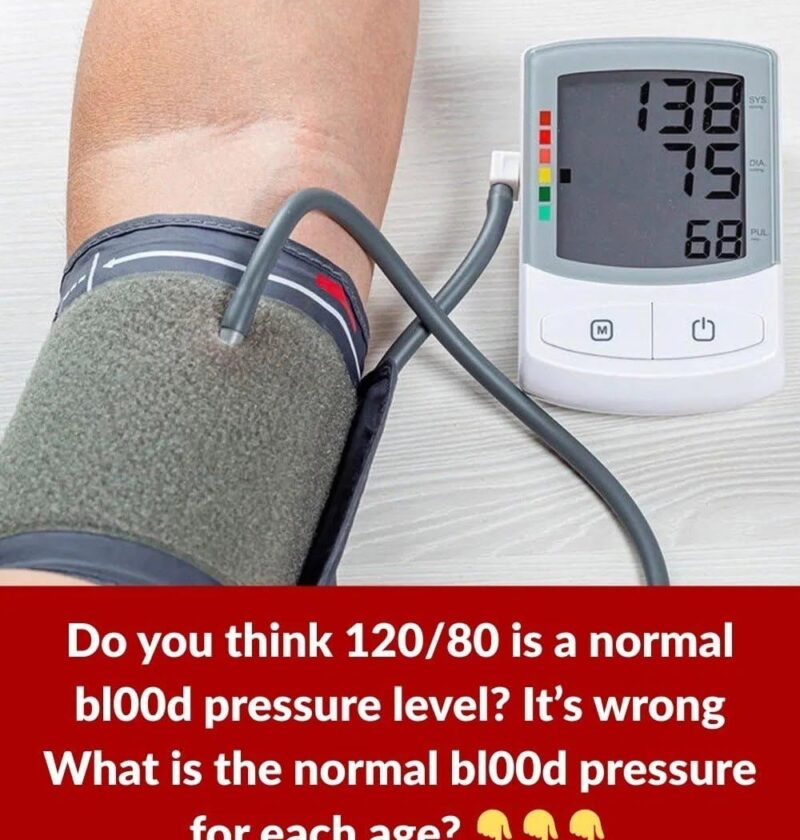
There isn’t a completely different “perfect blood pressure for every single age,” but there are typical healthy ranges that doctors use to judge whether your blood pressure is normal or high.
Blood pressure is written like 120/80 mmHg:
- First number = systolic (pressure when heart beats)
- Second number = diastolic (pressure when heart rests)
Normal blood pressure (general guideline for all adults)
For most adults (18+), the healthy range is:
- Normal: less than 120/80 mmHg
- Elevated: 120–129 / less than 80
- High (Hypertension) stage 1: 130–139 / 80–89
- High (Hypertension) stage 2: 140+ / 90+
This is the standard medical classification used for Hypertension.
Blood pressure by age (typical averages, not strict rules)
Children
- Newborns: ~60–90 / 20–60
- 1–5 years: ~95–105 / 50–65
- 6–12 years: ~100–120 / 60–75
Teenagers
- 13–17 years: ~110–130 / 65–85
Adults
- 18–39 years: ~110–120 / 70–80
- 40–59 years: ~115–135 / 75–85
- 60+ years: ~120–145 / 70–90 (can be slightly higher with age)
Important reality most people miss
- “Normal” does NOT mean one fixed number for everyone
- Slight variation is normal due to stress, sleep, caffeine, or activity
- One reading is not enough for diagnosis—trend matters more
When to worry
- Consistently ≥140/90 → likely hypertension
- Consistently <90/60 with symptoms (dizziness, fainting) → may be low blood pressure issue
If you want, I can also give you:
- a simple chart to check BP at home correctly
- or signs your BP is high even without a machine (very useful and often missed)