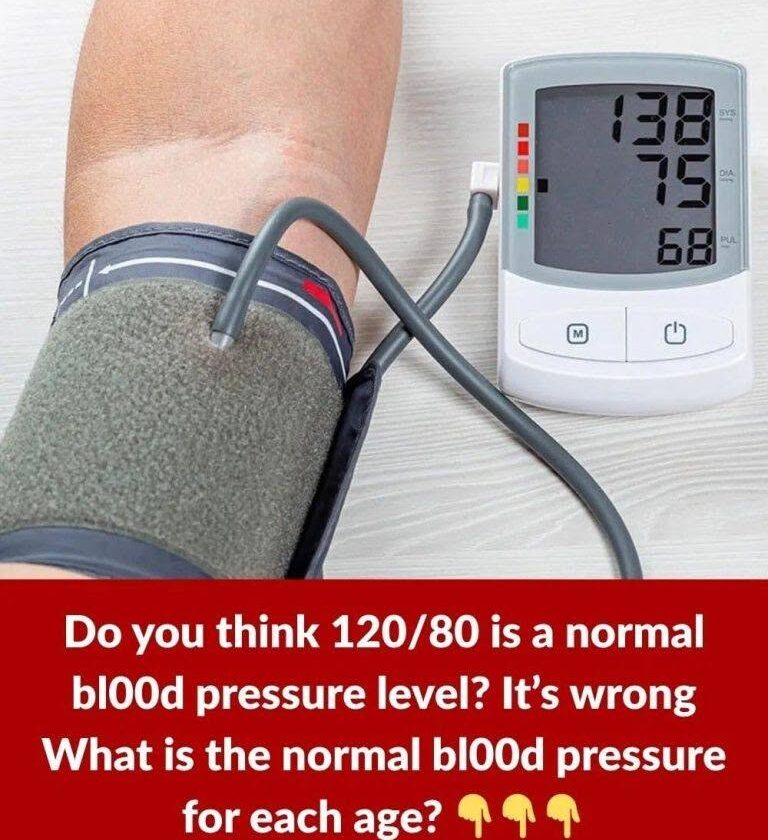
The idea that there’s a different “normal blood pressure for each age” is a common misconception. For most adults, the same general blood pressure targets apply regardless of age, although treatment decisions may be individualized.
Here’s a general guide for adults:
| Blood pressure (mmHg) | Category |
|---|---|
| Less than 120/80 | Normal |
| 120–129 and less than 80 | Elevated |
| 130–139 or 80–89 | Hypertension (Stage 1) |
| 140/90 or higher | Hypertension (Stage 2) |
| 180/120 or higher | Hypertensive crisis—seek immediate medical evaluation, especially if accompanied by symptoms such as chest pain, shortness of breath, severe headache, vision changes, or confusion. |
Does age change what’s “normal”?
- Children and teenagers: Normal blood pressure depends on age, sex, and height, so pediatric charts are used.
- Adults (18+): A blood pressure below 120/80 mmHg is generally considered normal. Blood pressure often rises with age, but that doesn’t necessarily mean higher values are considered “normal” or ideal.
Tips for getting an accurate reading
- Rest quietly for at least 5 minutes beforehand.
- Sit with your back supported and feet flat on the floor.
- Keep your arm supported at heart level.
- Avoid caffeine, smoking, and exercise for about 30 minutes before measuring if possible.
- Take two readings about 1 minute apart and average them.
If you tell me your age and your blood pressure reading (for example, 135/85 mmHg), I can help interpret what it means in context.