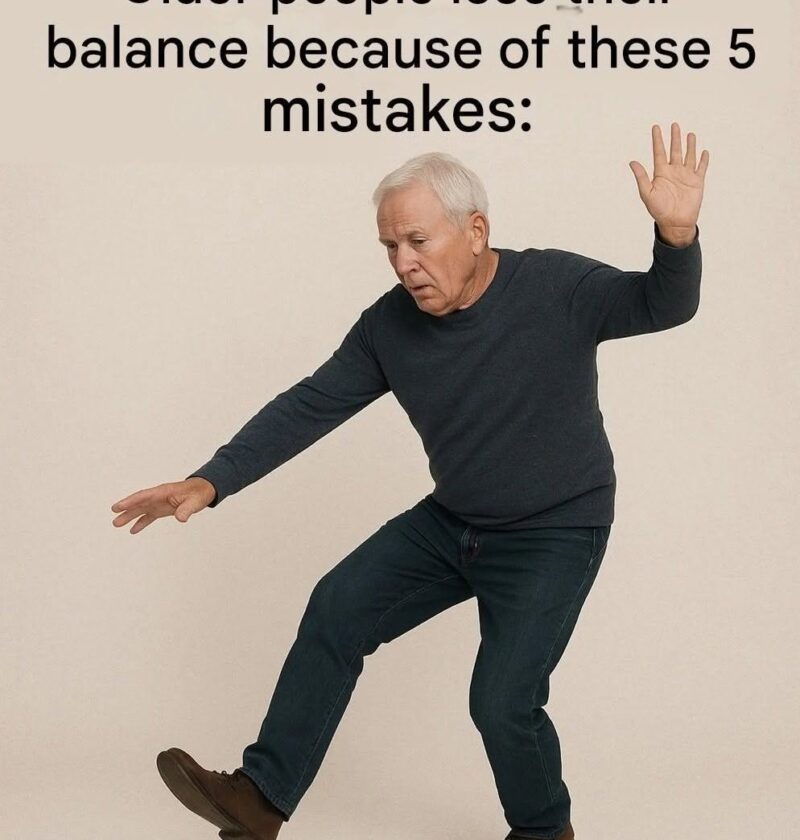
Loss of balance in older adults is usually not random—it often comes from everyday habits that gradually increase fall risk. Here are 5 common mistakes that contribute to balance problems:
1. Not staying physically active
Many older adults reduce movement because of pain, fear of falling, or stiffness.
But inactivity leads to weaker leg muscles and poorer coordination, both of which are essential for balance.
2. Ignoring vision or hearing changes
Poor eyesight or reduced hearing makes it harder for the brain to judge distance, movement, and surroundings.
Even something like outdated glasses can significantly increase the risk of missteps.
3. Wearing unsafe footwear
Slippers without grip, loose sandals, or worn-out soles can easily cause slipping or unstable walking.
Good balance depends a lot on stable contact between feet and the ground.
4. Side effects from medications
Some common medicines (like blood pressure drugs, sleep aids, or sedatives) can cause:
- dizziness
- drowsiness
- low blood pressure when standing
These effects often lead to sudden imbalance, especially when standing up quickly.
5. Home hazards and poor lighting
Clutter, loose rugs, wet floors, and dim lighting are major hidden causes of falls.
Even strong people can lose balance if they can’t clearly see or safely navigate their environment.
If you want, I can also share a simple daily routine to improve balance or a home safety checklist to prevent falls—both are very effective for older adults.