That headline is misleading in how it frames timing and certainty.
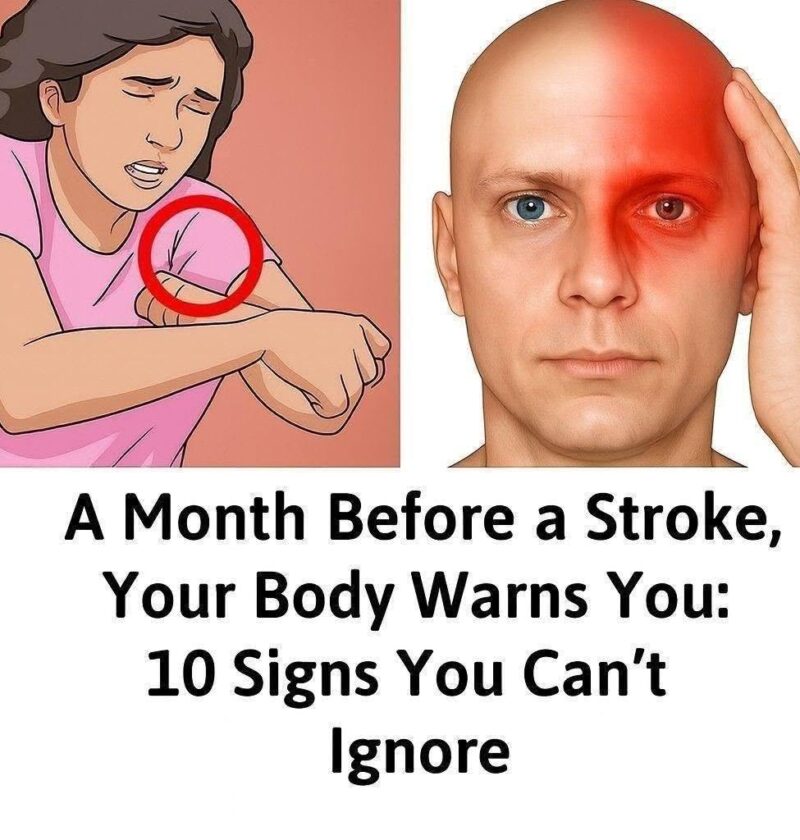
“A month before a stroke, your body warns you: 10 signs not to ignore”
What it really means
It’s usually talking about:
- Stroke risk factors (long-term issues like high blood pressure), and
- Sometimes TIA (transient ischemic attacks), which can occur days or weeks before a stroke in some people.
But there is no reliable “10 signs one month before” rule in medicine.
The reality about stroke warning signs
1. Some people get a warning (TIA)
A TIA can cause temporary symptoms such as:
- Sudden weakness or numbness (face/arm/leg, usually one side)
- Trouble speaking or understanding speech
- Vision loss or double vision
- Dizziness or loss of balance
These can happen:
- Minutes before a stroke
- Days before a stroke
- Or not at all
2. Many strokes happen without warning
A large number occur suddenly, especially hemorrhagic strokes.
Why “10 signs one month before” is misleading
- It turns risk factors + vague symptoms into a fixed checklist
- It suggests a predictable timeline, which is not medically accurate
- It mixes unrelated issues (fatigue, headaches, dizziness, etc.) that have many other causes
Real stroke risk warning signs (important)
The most urgent signs are sudden and use the FAST rule:
- Face drooping
- Arm weakness
- Speech difficulty
- Time to call emergency help immediately
Other serious symptoms:
- Sudden confusion
- Sudden vision loss
- Sudden severe headache
- Loss of balance or coordination
Real prevention factors (what actually matters)
These are proven ways to reduce stroke risk:
- Control blood pressure (most important)
- Manage diabetes
- Reduce cholesterol
- Stop smoking
- Exercise regularly
- Maintain healthy weight
- Treat heart conditions (like atrial fibrillation)
Bottom line
The headline really means:
“Some risk factors and possible mini-stroke symptoms can precede a stroke, but there is no reliable set of 10 warning signs that appear exactly one month before.”
If you want, I can break down which symptoms are actually urgent vs. usually harmless, because a lot of these articles intentionally blur that line.