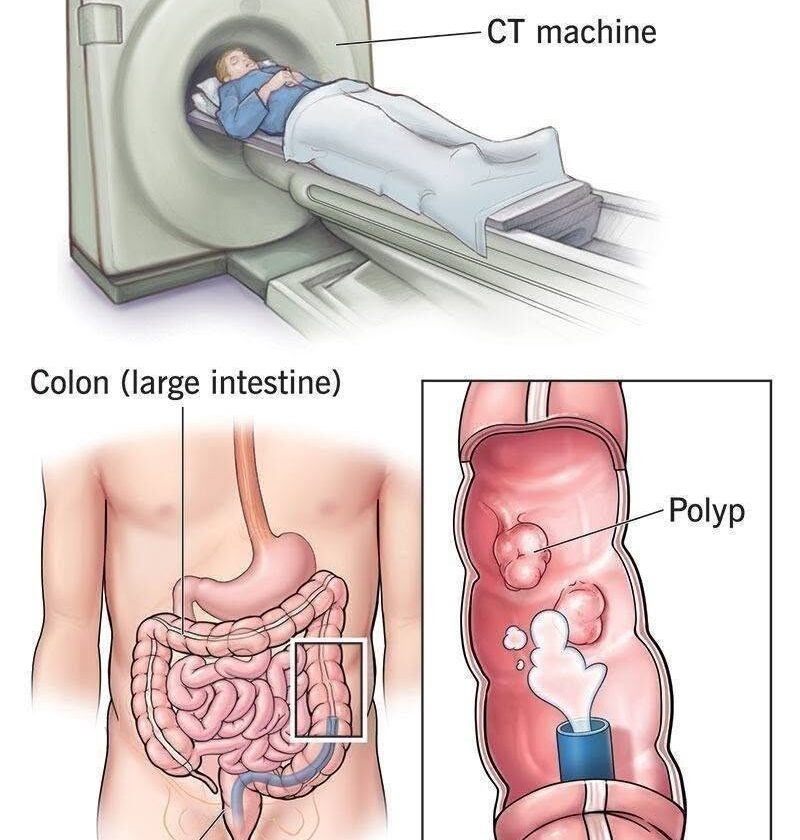
The claim that a “new method means colonoscopy will no longer be an invasive examination” refers to ongoing advances in colorectal cancer screening, but it does not mean traditional colonoscopy has been completely replaced.
A standard colonoscopy is still an invasive procedure because a flexible camera is inserted through the rectum to examine the colon. It remains one of the most accurate tests because doctors can find and remove polyps during the same procedure.
Newer or less invasive approaches include:
- Stool-based tests
- FIT (fecal immunochemical test): Detects hidden blood in stool.
- Stool DNA tests: Look for DNA changes associated with colorectal cancer.
- These can be done at home but, if abnormal, a colonoscopy is usually still needed.
- CT colonography (“virtual colonoscopy”)
- Uses CT imaging to create pictures of the colon.
- It does not require a camera inserted into the colon, but bowel preparation is still usually required, and abnormal findings may require a traditional colonoscopy.
- Emerging technologies
- Researchers are studying advanced imaging, artificial intelligence-assisted screening, and other approaches that may improve detection while reducing invasiveness.
For now, the best screening method depends on a person’s age, risk factors, family history, previous findings, and local medical guidelines. A less invasive test may be appropriate for some people, but colonoscopy remains an important option—especially for those at higher risk or with concerning symptoms such as blood in stool, unexplained anemia, or persistent changes in bowel habits.