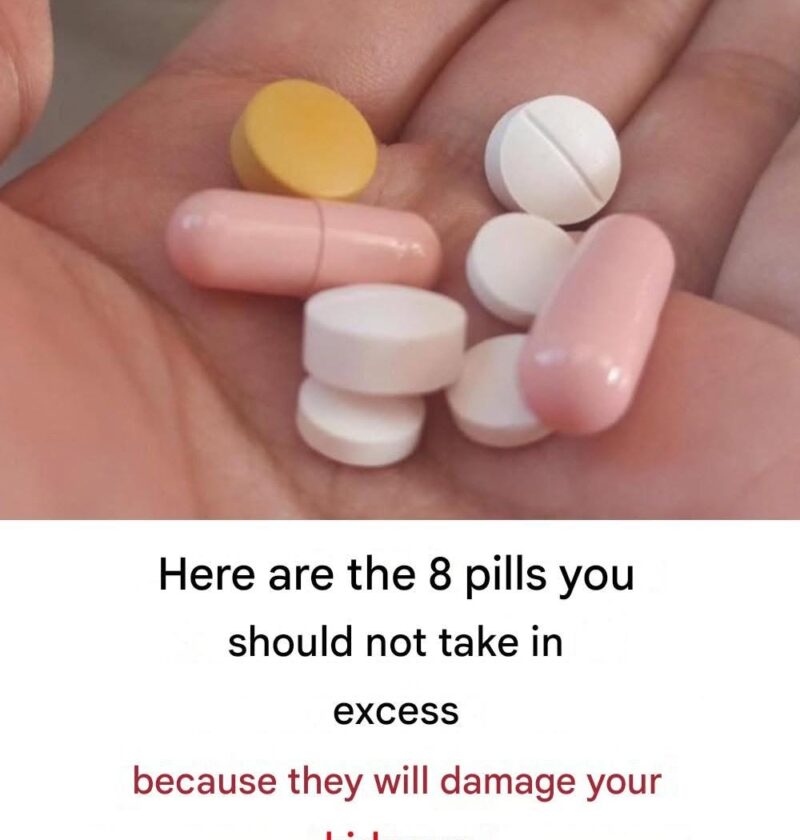
The claim “eight pills you shouldn’t take because they damage your kidneys” is often presented too broadly. Many medications are safe and effective when used correctly, but some medicines can stress the kidneys or increase the risk of kidney injury, especially with high doses, long-term use, dehydration, or existing kidney disease.
Examples of medications that may require caution include:
- Nonsteroidal anti-inflammatory drugs (NSAIDs)
- Examples: ibuprofen, naproxen, diclofenac.
- Can reduce blood flow to the kidneys and may cause kidney injury in some people, especially with frequent use or certain health conditions.
- Certain antibiotics
- Some antibiotics can affect kidney function, particularly in people who already have kidney problems or when doses are not adjusted properly.
- Some water pills (diuretics)
- Used for blood pressure or heart conditions.
- Can contribute to dehydration or electrolyte changes if not monitored.
- Certain blood pressure medicines
- Some medications that affect kidney blood flow may require kidney function and potassium monitoring.
- Some acid-reducing medicines
- Long-term use of certain proton pump inhibitors has been associated in studies with kidney problems in some people, though the risk varies.
- Lithium
- Used for certain mental health conditions.
- Long-term use can affect kidney function and requires monitoring.
- Some antiviral or cancer treatments
- Certain specialized medicines can be kidney-stressing and require monitoring.
- High-dose or unnecessary supplements
- Some supplements, especially in excessive amounts or from unreliable sources, can harm the kidneys.
To protect your kidneys:
- Avoid taking painkillers frequently without medical advice.
- Stay hydrated, especially during illness or hot weather.
- Tell your healthcare provider if you have kidney disease before starting new medicines.
- Do not stop prescribed medication without discussing it with your doctor.
If you share the specific eight pills named in the article or video, I can check which claims are accurate and which are exaggerated.