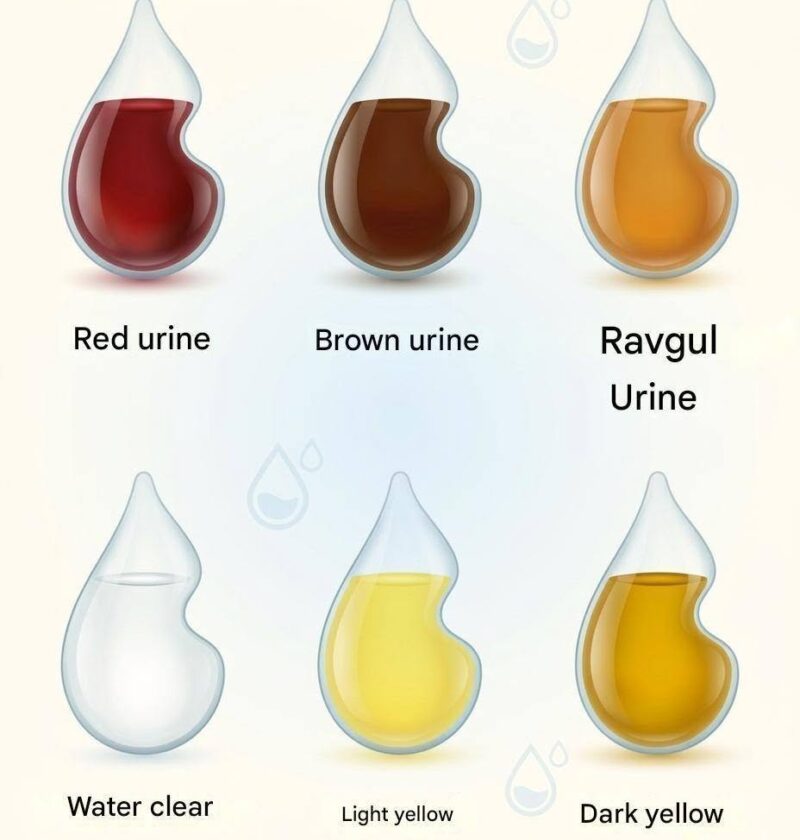
The color of your urine can provide clues about hydration and some health conditions, but it does not diagnose a problem by itself. Many factors—including foods, vitamins, medications, and how much fluid you drink—can change urine color.
Common urine colors and what they may mean
🟡 Pale yellow to light straw
- Usually a sign of good hydration and normal urine.
🟨 Dark yellow
- Often means your urine is more concentrated, commonly from not drinking enough fluids.
🟤 Amber or honey-colored
- May indicate dehydration. Drinking more water may help if you have no fluid restrictions.
🟢 Green or blue
- Can come from certain dyes, foods, medications, or rarely some infections.
🟠 Orange
- May be caused by dehydration, certain medications, or foods. Persistent orange urine should be discussed with a healthcare professional.
🔴 Pink or red
- Could be from foods like beets, but it may also indicate blood in the urine, which should be checked—especially if it is unexplained.
🟤 Brown or tea-colored
- Can occur with severe dehydration, some medications, muscle injury, or liver-related problems and may need medical evaluation if persistent.
⚪ Cloudy or milky
- Can be related to dehydration, crystals, infection, or other urinary issues—especially if accompanied by pain, burning, or fever.
Seek medical advice if you notice:
- Blood in your urine.
- A persistent unusual color without an obvious cause.
- Burning, pain, fever, back/flank pain, or a strong change in urinary habits.
- Very dark urine with yellowing of the skin or eyes.
Bottom line: Light yellow urine is generally a healthy sign, while very dark, red, or unusual urine colors that persist may deserve attention. Your urine color is just one piece of information—symptoms and overall health matter too.