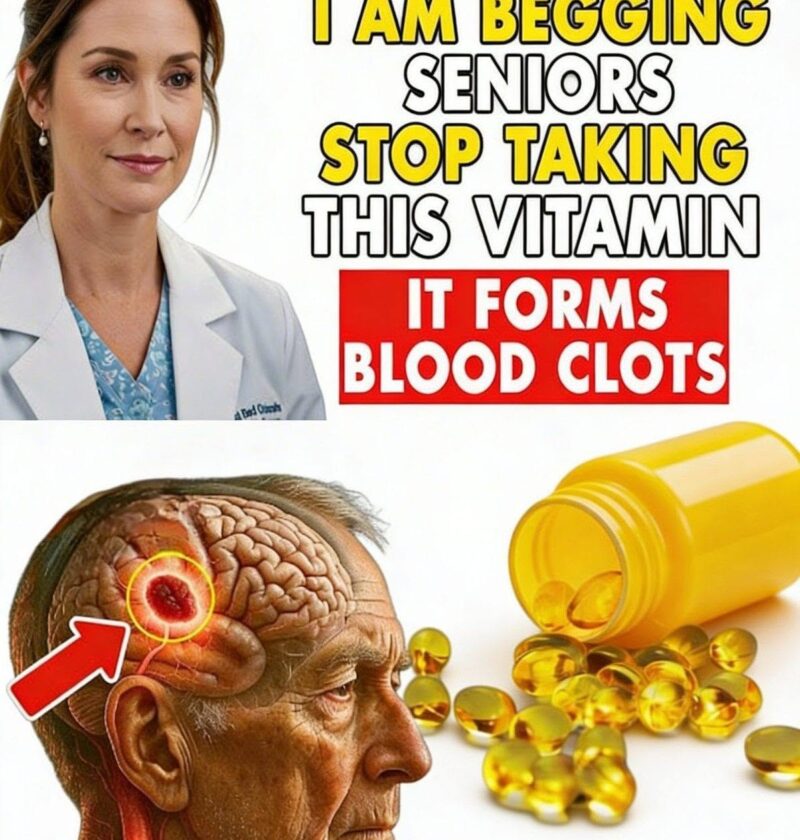
The claim that a vitamin can “raise stroke risk overnight” is a dramatic warning that is often used in health headlines, but the reality is more specific: most vitamins do not suddenly cause a stroke in healthy people when taken as directed.
Some situations where vitamins or supplements may be linked to higher cardiovascular risk include:
- High-dose supplements (especially without medical need)
Very large doses of certain supplements can affect the body differently than normal dietary amounts. - Vitamin E supplements
Some studies have raised concerns that high-dose vitamin E may increase bleeding risk in certain people, which is relevant for people at risk of hemorrhagic stroke or taking blood thinners. - Calcium supplements (in some studies)
Research has explored whether certain patterns of calcium supplementation may affect cardiovascular risk, though findings are mixed and depend on the person and dose. - Supplements contaminated with unlisted ingredients
Some “energy,” bodybuilding, or weight-loss products marketed as vitamins have been linked to cardiovascular problems. - Interactions with medicines
Supplements can interfere with blood thinners, blood pressure medicines, or other heart medications.
For older adults, the safest approach is usually:
- Avoid megadose vitamins unless prescribed.
- Check supplements against your current medications.
- Use vitamins to correct a deficiency rather than assuming “more is better.”
If you mean a specific vitamin from the headline (for example vitamin B6, B12, D, E, calcium, or another one), tell me which one and I can explain what the evidence actually shows.