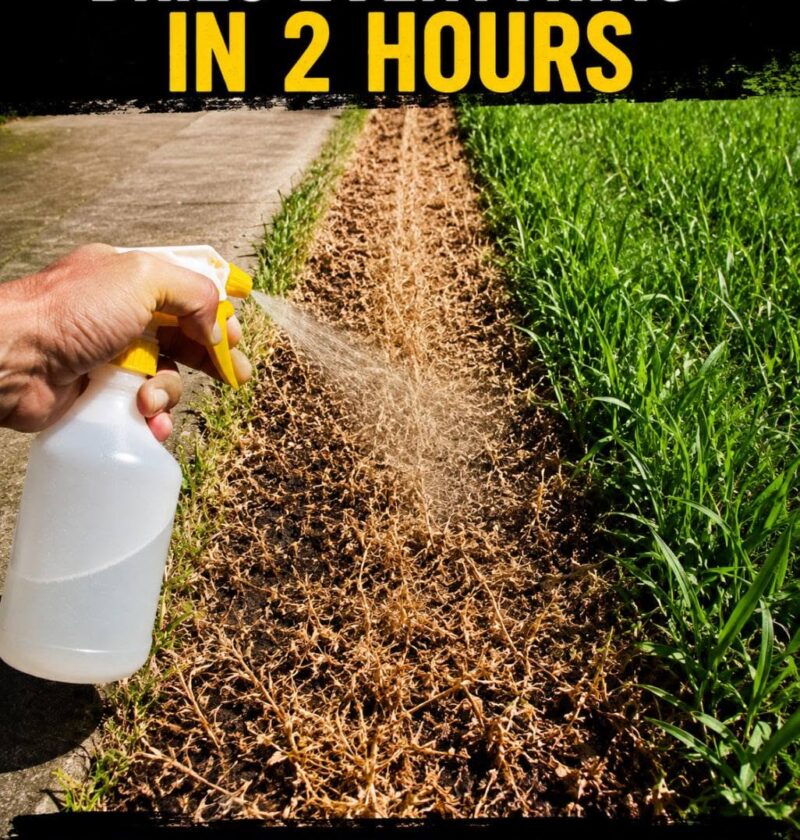
The Best Homemade Weed Killer: A Simple DIY Solution for Unwanted Weeds
Weeds can quickly take over gardens, driveways, sidewalks, and outdoor spaces, making them look untidy and difficult to maintain. While many commercial weed killers are available, some people prefer homemade alternatives because they are simple, affordable, and made from common household ingredients.
A popular homemade weed-control method uses a mixture that helps dry out the leaves of unwanted plants. This type of solution works by removing moisture from the plant surface, which can cause visible wilting and drying. However, it is important to understand that homemade weed killers are not selective — they may harm any plant they come into contact with, including grass, flowers, and garden plants.
Ingredients Commonly Used
A basic homemade weed spray often includes:
- White vinegar
- Dish soap
- Water (if needed to dilute the mixture)
Vinegar contains acetic acid, which can damage the outer layer of weed leaves and cause them to dry out. Dish soap is often added because it helps the liquid stick to the leaves instead of quickly running off.
How to Use a Homemade Weed Killer
- Choose a dry, sunny day when rain is not expected for several hours.
- Mix the ingredients carefully in a spray bottle.
- Apply the solution directly to the leaves of the weeds you want to remove.
- Avoid spraying nearby plants that you want to keep healthy.
- Check the results after a few days and repeat the application if necessary.
Important Things to Know
Although some weeds may show signs of drying within a few hours, complete removal usually depends on the type of weed, its size, weather conditions, and how deeply its roots are established. Many homemade solutions affect only the visible parts of the plant and may not completely kill deep roots, meaning weeds can grow back.
For better long-term control, combine weed removal methods such as pulling weeds by hand, adding mulch to block sunlight, and maintaining healthy soil conditions.
Final Thoughts
A homemade weed killer can be a useful option for managing small areas of unwanted growth when used carefully. It is inexpensive, easy to prepare, and can help reduce the need for stronger chemical products. However, it should always be applied responsibly because it can damage desirable plants and surrounding areas if used incorrectly.