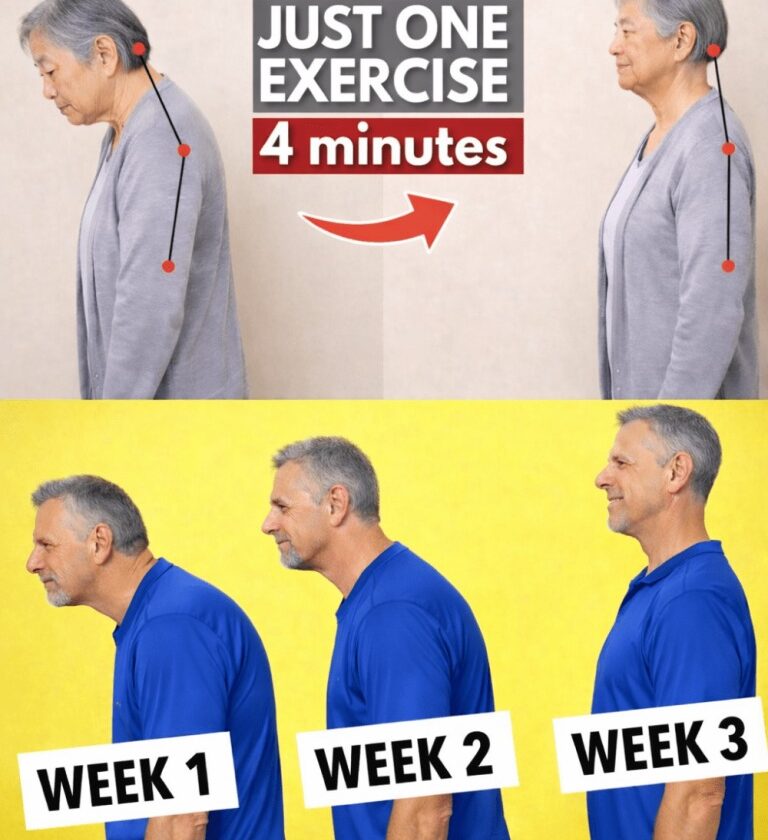
Gentle 4-Minute Daily Routine to Improve Forward Head Posture After 60 (Safe, Evidence-Based Guide)
Source: American Physical Therapy Association (APTA), NHS (UK), Mayo Clinic
Introduction: Understanding Forward Head Posture
Forward head posture is a very common condition, especially in older adults. It happens when the head gradually shifts forward from its natural alignment over time.
Forward head posture can contribute to:
- Neck stiffness
- Shoulder tension
- Headaches
- Reduced mobility
It often develops due to:
- Long-term sitting
- Looking down at phones or reading
- Weak neck and upper back muscles
- Age-related changes in posture
The good news is that gentle, consistent exercises can help improve alignment and reduce discomfort over time.
Important Reality Before Starting
- Posture cannot be permanently “fixed” in a few minutes
- Improvement requires daily consistency over weeks
- Movements should be gentle, not forceful
- Pain should never be ignored
If you feel dizziness or sharp pain, stop immediately and consult a healthcare professional.
4-Minute Gentle Posture Routine (For Daily Use)
1. Chin Tuck Reset (1 Minute)
How to do it:
- Sit or stand tall
- Gently pull your chin backward (like making a double chin)
- Keep eyes forward
- Hold for 3–5 seconds, then relax
Repeat:
8–10 slow repetitions
Why it helps:
Strengthens deep neck muscles that support proper head alignment.
2. Shoulder Roll and Open Chest (1 Minute)
How to do it:
- Roll shoulders slowly backward in circles
- Open the chest gently while breathing deeply
- Keep movements smooth
Repeat:
10–12 slow rolls
Why it helps:
Releases tension in the upper back and counteracts slouching.
3. Wall Posture Alignment (1 Minute)
How to do it:
- Stand with back against a wall
- Heels slightly away from the wall
- Try to align: head, shoulders, and back as close as comfortable
- Hold gently while breathing
Duration:
30–60 seconds
Why it helps:
Retrains the body to recognize correct posture position.
4. Neck Side Stretch (1 Minute)
How to do it:
- Slowly tilt your head toward one shoulder
- Hold gently for 10–15 seconds
- Switch sides
Why it helps:
Improves flexibility in tight neck muscles that pull the head forward.
What You Can Expect Over Time
With daily practice, many people may notice:
- Less neck stiffness
- Improved posture awareness
- Reduced shoulder tension
- Easier head movement
However, structural posture changes take weeks to months, not minutes.
Common Mistakes to Avoid
- Forcing the neck backward aggressively
- Holding breath during exercises
- Doing exercises only once in a while
- Ignoring pain or dizziness
Extra Habits That Improve Results
- Keep screens at eye level
- Take posture breaks every 30–60 minutes
- Use supportive chairs
- Sleep with proper neck support
- Stay physically active
When to See a Professional
Seek guidance if you experience:
- Persistent neck pain
- Numbness or tingling in arms
- Severe posture imbalance
- Frequent headaches
A physiotherapist can provide personalized correction plans.
Final Thoughts: Small Daily Habits Make the Difference
Forward head posture improves best with gentle, consistent movement and better daily habits, not quick fixes. A short routine like this can help reduce stiffness and gradually support healthier alignment over time.
PART 2: Simple 4-Minute Routine
- Chin tucks (1 min)
- Shoulder rolls (1 min)
- Wall posture hold (1 min)
- Neck side stretch (1 min)
If you want, I can also turn this into:
- A viral SEO blog with “before and after posture habits”
- A YouTube script (physiotherapist style)
- Or a “10 best exercises for neck pain after 60” guide