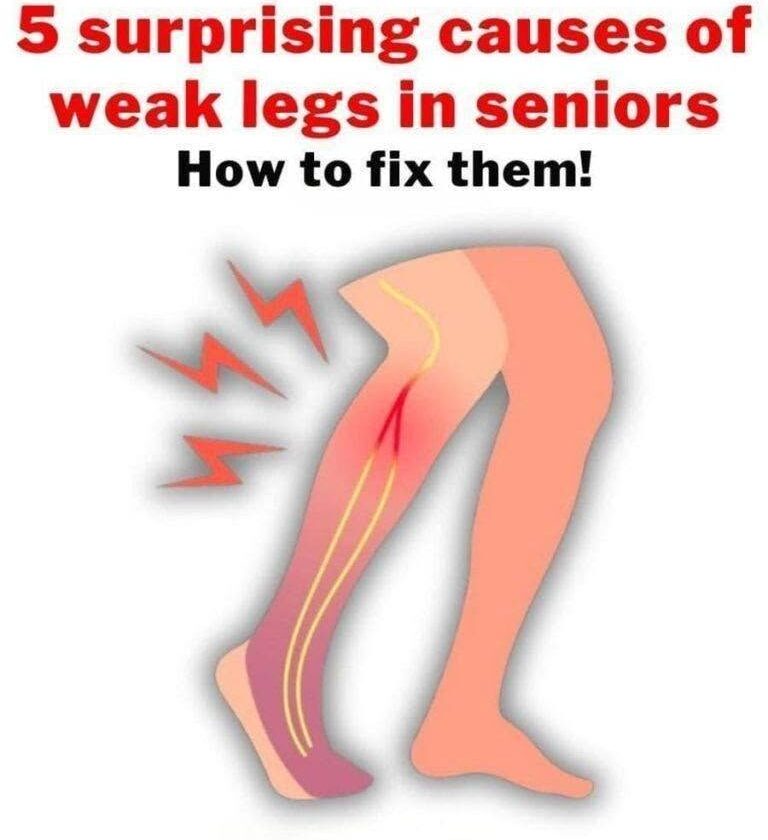
The title “5 surprising causes of weak legs in seniors—and how to fix them!” is a common health-content format. Leg weakness in older adults is not a normal part of aging that should simply be accepted—it can have many causes, and the right solution depends on the underlying reason.
Here are five common causes to consider:
- Loss of muscle mass (sarcopenia)
- With age, people can gradually lose muscle strength, especially without regular resistance exercise.
- What may help: Strength training adapted to ability, adequate protein intake, and regular movement.
- Vitamin B12 deficiency
- Low B12 can affect nerves and may contribute to weakness, balance problems, or numbness.
- What may help: A blood test can check levels; supplements help when a deficiency is present.
- Vitamin D deficiency
- Low vitamin D can contribute to muscle weakness and increased fall risk in some people.
- What may help: Testing and appropriate supplementation if levels are low.
- Nerve problems (neuropathy)
- Conditions such as diabetes can damage nerves that control sensation and movement.
- What may help: Managing the underlying condition, physical therapy, and medical treatment when needed.
- Circulation or heart-related issues
- Reduced blood flow to the legs or certain heart conditions can cause tiredness, heaviness, or difficulty walking.
- What may help: Medical evaluation, exercise guidance, and treatment of risk factors such as high blood pressure or cholesterol.
Other possible contributors include medication side effects, arthritis, poor balance, inactivity, infections, and neurological conditions.
Helpful steps for many seniors:
- Do safe strength and balance exercises.
- Eat enough protein and a balanced diet.
- Stay hydrated.
- Review medications with a healthcare professional.
- Get regular vision and health checkups.
Seek medical advice sooner if leg weakness is sudden, affects one side of the body, comes with trouble speaking, severe dizziness, chest pain, loss of bladder/bowel control, or rapidly worsening walking ability.