This Is Why We Get Cramps at Night
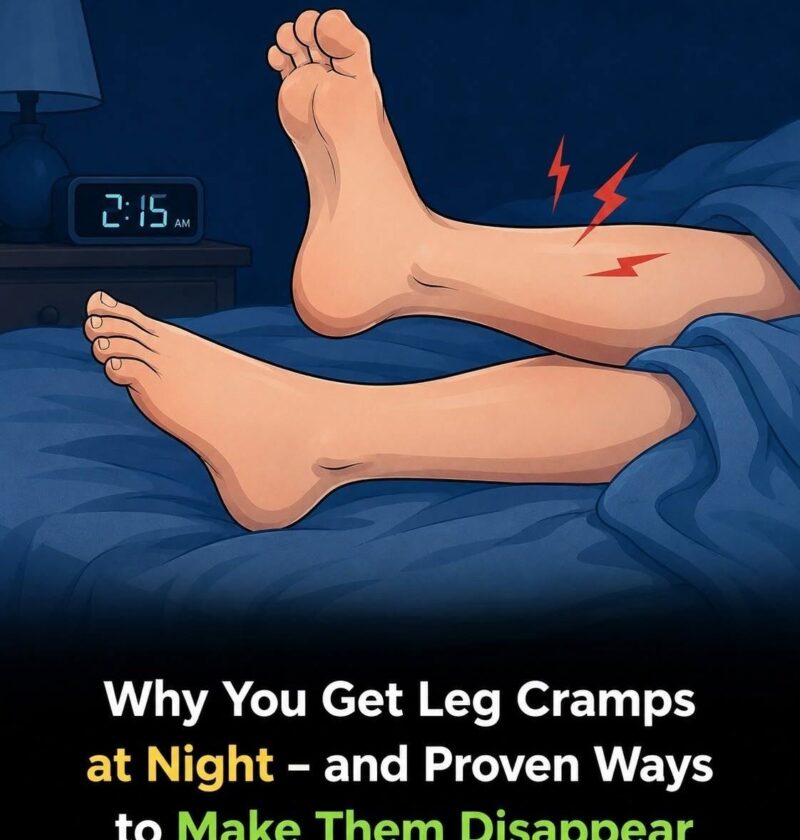
Nighttime cramps are sudden, painful muscle contractions that often affect the calves, feet, or thighs and can wake you from sleep. They are common, especially in older adults, and may happen for several reasons.
1. Muscle fatigue or overuse
Extra activity during the day—such as:
- Long walks
- Standing for many hours
- New exercises
- Heavy physical work
can tire muscles and make them more likely to cramp at night.
2. Dehydration
Not drinking enough fluids can affect normal muscle function. This is more likely after:
- Hot weather
- Sweating
- Exercise
Keeping hydrated throughout the day may help reduce cramps for some people.
3. Mineral and electrolyte changes
Muscles need minerals such as:
- Potassium
- Magnesium
- Calcium
- Sodium
to work properly. Imbalances may contribute to cramps, although supplements only help when a deficiency is present.
4. Staying in one position while sleeping
Some sleeping positions may shorten certain muscles. For example, having your foot pointed downward for long periods can contribute to calf or foot cramps.
5. Age-related changes
As we get older, changes in:
- Muscle mass
- Flexibility
- Nerve function
can make nighttime cramps more common.
6. Certain medications or health conditions
Some medicines and medical conditions may increase the likelihood of muscle cramps. If cramps start suddenly or become frequent, it is worth discussing with a healthcare professional.
What to do when a cramp happens
- Gently stretch the affected muscle
- Massage the area
- Slowly move the foot or leg
- Apply warmth with a warm towel or heating pad
- Walk carefully if you are able
For a calf cramp, gently pulling your toes upward toward your knee can help stretch the muscle