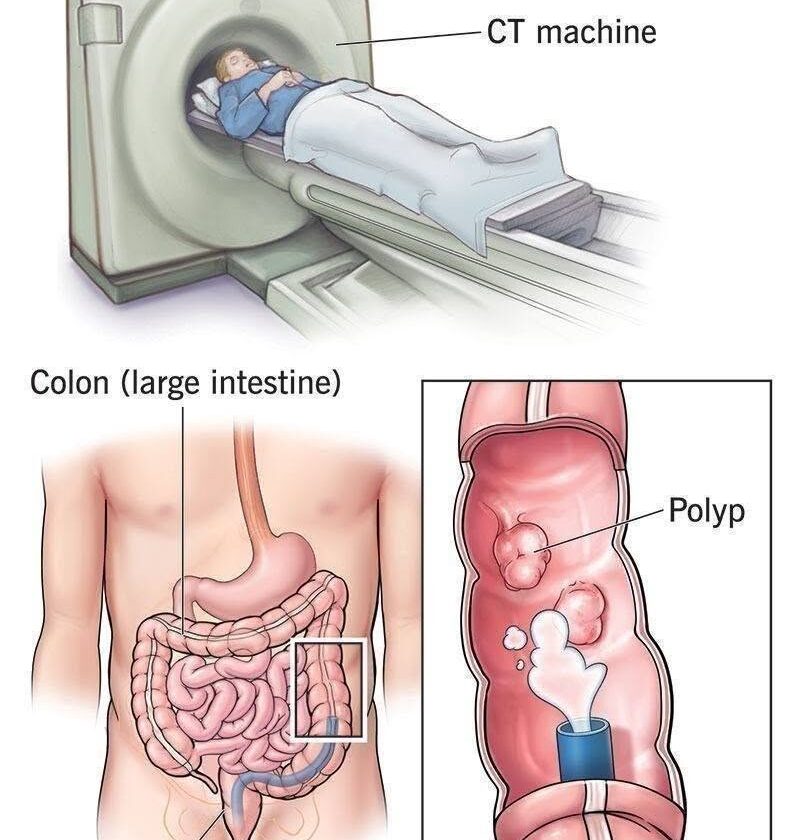
Headlines like “Colonoscopy will no longer be an invasive examination” are usually misleading or exaggerated.
Here’s what is actually happening:
- A traditional colonoscopy remains the most comprehensive test for examining the inside of the large intestine. It involves inserting a flexible camera through the rectum and has the advantage that doctors can remove polyps and take biopsies during the same procedure.
- Researchers are developing and improving less invasive alternatives, but these do not fully replace colonoscopy in all situations.
Some alternatives include:
- Stool-based tests that look for hidden blood or abnormal DNA. These are useful for screening people at average risk, but a positive result usually needs a follow-up colonoscopy.
- CT colonography (virtual colonoscopy), which uses CT scans to create images of the colon. It still requires bowel preparation, and if an abnormality is found, a standard colonoscopy is usually needed to remove it or take a biopsy.
- Colon capsule endoscopy, in which a person swallows a small camera capsule. This can be helpful in selected cases, but it is not suitable for everyone and cannot perform biopsies or remove polyps.
So, while screening options are expanding and becoming less invasive for some people, standard colonoscopy is still the gold standard when doctors need to directly examine the colon, diagnose abnormalities, or treat them during the same procedure.
If you saw this headline in an article or social media post, it’s likely referring to one of these newer screening methods rather than the complete replacement of conventional colonoscopy.