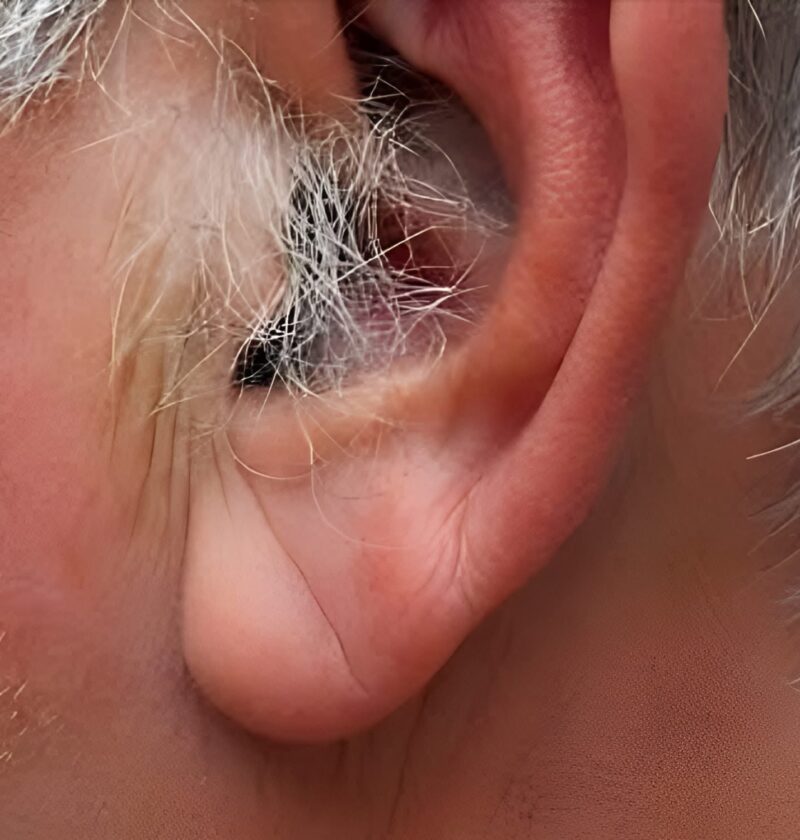
The claim “ear hair after 40 is not random” is partly true — increased ear hair growth is a common age-related change, but it is not a reliable sign of a specific disease or hidden health problem.
Why does ear hair increase after 40?
As people age, several normal changes can make ear hair more noticeable:
- Hormonal changes
- Hair follicles can become more sensitive to androgens (male hormones), especially in men.
- This can cause thicker, longer hairs in areas such as the ears, nose, and eyebrows.
- Age-related changes in hair growth cycles
- Some hairs that were previously fine and barely visible may grow thicker and longer over time.
- Genetics
- Family patterns strongly influence who develops more prominent ear hair.
Does ear hair mean something is wrong?
Usually, no. Ear hair alone does not indicate:
- High cholesterol
- Heart disease
- Diabetes
- Poor circulation
- “Toxin buildup”
Some older studies explored associations between certain physical traits and health conditions, but ear hair itself is not considered a diagnostic marker.
What should you do about it?
- Trim visible ear hair safely with an electric trimmer designed for this purpose.
- Avoid inserting sharp objects deep into the ear canal.
- If you notice sudden, unusual hair growth along with other changes (such as unexplained weight changes, severe fatigue, or new hormonal symptoms), discuss it with a healthcare professional.
So the real meaning of ear hair after 40 is usually simple: your hair follicles are changing with age, hormones, and genetics. It’s a normal part of ageing for many people.