What Does the Color of Your Urine Say About Your Health?
Urine color can provide clues about hydration, diet, medications, and sometimes health conditions, but color alone cannot diagnose a problem. Many normal factors can change urine color temporarily.
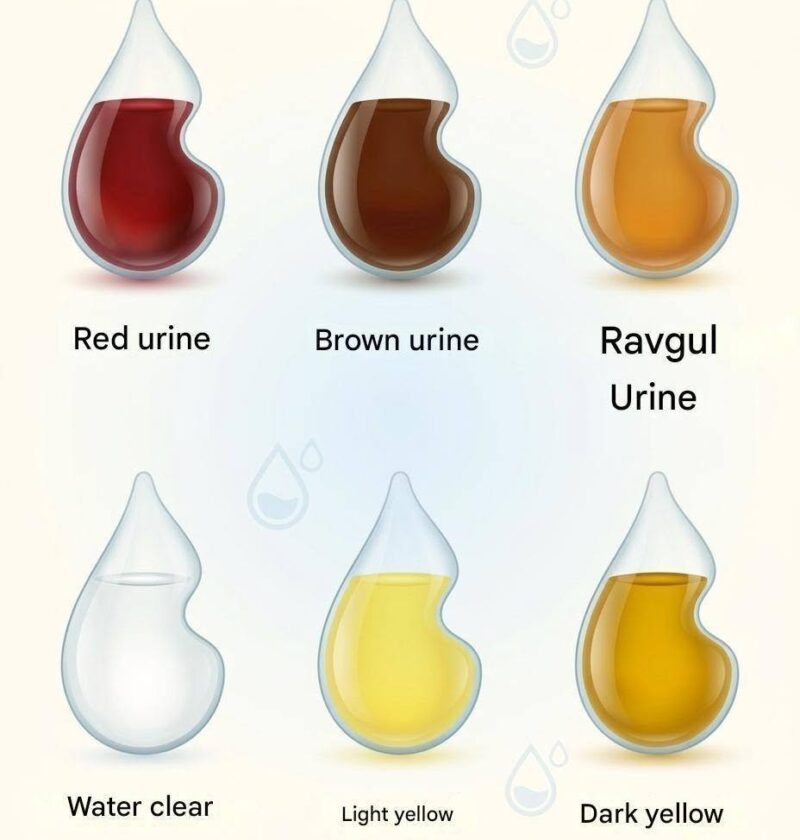
Clear or very pale yellow
✅ Often means you are well hydrated.
⚠️ If your urine is consistently completely clear, you may be drinking more fluid than your body needs.
Light yellow to amber
✅ Usually considered a normal range.
- Pale yellow often indicates good hydration.
- Darker yellow may mean you need more fluids.
Dark yellow or orange
Possible causes:
- Dehydration
- Certain vitamins (especially high-dose B vitamins)
- Some medications
Try drinking water and see if it returns to a lighter color.
Brown or tea-colored urine
Possible causes include:
- Severe dehydration
- Certain medications
- Liver or bile-related problems
- Muscle breakdown (rare)
Seek medical advice if it persists or occurs with other symptoms.
Pink or red urine
Possible causes:
- Blood in the urine (which can come from urinary infections, kidney stones, or other causes)
- Certain foods, such as beets
- Some medications
Blood in urine should generally be checked by a healthcare professional, especially if unexplained.
Blue or green urine
Possible causes:
- Certain medications or dyes
- Some infections (less common)
Cloudy or milky urine
Possible causes:
- Dehydration
- Urinary tract infection (UTI)
- Crystals or other substances in urine
If accompanied by burning, urgency, fever, or pelvic pain, medical evaluation may be needed