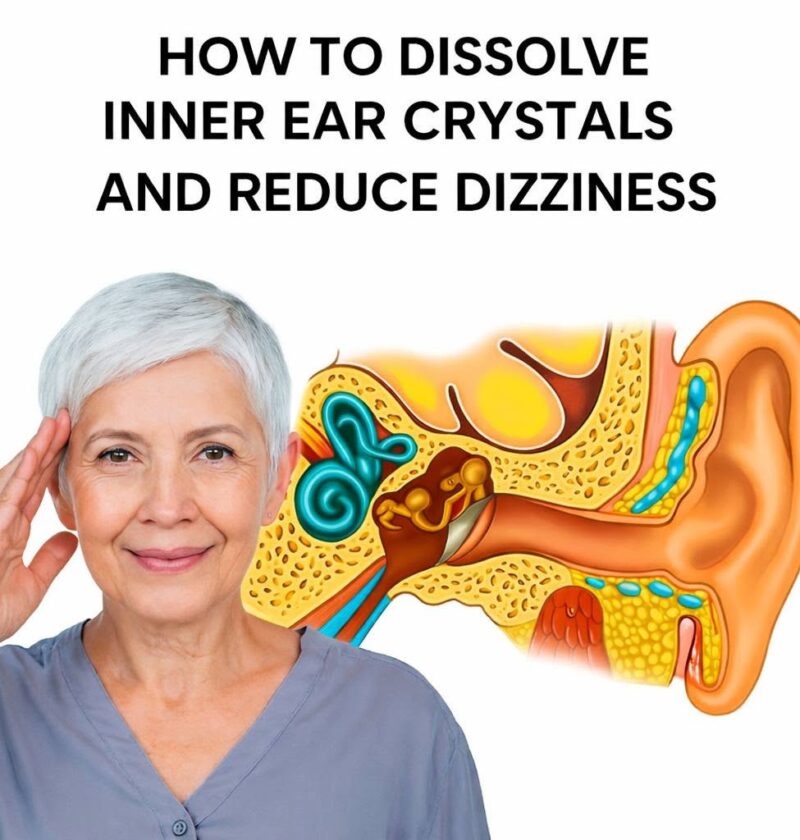
“Inner ear crystals” usually refers to tiny calcium carbonate particles (otoconia) in the inner ear that have become displaced. When they move into the wrong part of the balance system, they can cause benign paroxysmal positional vertigo (BPPV)—brief episodes of spinning dizziness triggered by head movements such as rolling over in bed, looking up, or bending down.
Ways to help reposition inner ear crystals
1. Canalith repositioning maneuvers (most effective for BPPV)
These are specific head and body movements designed to move the crystals back where they belong.
- Epley maneuver: The most commonly used technique for crystals in the posterior semicircular canal.
- Other maneuvers: The Semont maneuver or “half somersault” maneuver may be used in certain cases.
Because the correct maneuver depends on which ear and which inner-ear canal is affected, it is best to have the diagnosis confirmed by a healthcare professional (such as a doctor or physical therapist trained in vestibular rehabilitation) if possible.
2. Move carefully during episodes
- Sit down when dizziness starts to reduce the risk of falling.
- Avoid sudden head movements until symptoms settle.
- Use support when getting out of bed if you feel unsteady.
3. Vestibular rehabilitation
A trained therapist can teach exercises that help the brain adapt and reduce recurring dizziness, especially if vertigo keeps returning.
What usually does not fix the problem
- Drinking extra water or taking supplements does not “flush out” ear crystals.
- General neck stretches are not a substitute for proper repositioning maneuvers.
- Motion-sickness medicines may reduce symptoms but usually do not move the crystals back.
Seek medical care urgently if vertigo comes with:
- weakness or numbness on one side,
- trouble speaking,
- severe headache,
- fainting,
- chest pain,
- new hearing loss,
- difficulty walking,
- persistent dizziness that does not match typical brief BPPV episodes.
If your vertigo happens when you turn your head in bed, look up, or roll to one side, tell me which movement triggers it and whether it feels like spinning for seconds or a longer-lasting dizziness—I can help you identify whether it sounds like BPPV and which maneuver is typically used.