Very Dirty Mop? Don’t Throw It Away — Clean It Properly With This Simple Method
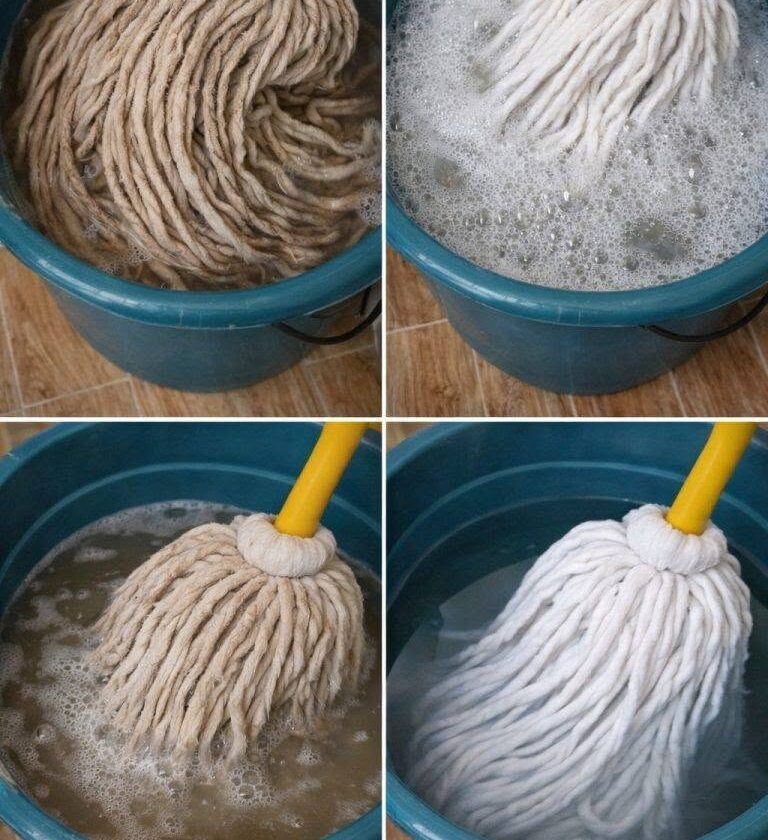
A mop can become dirty over time because it collects dust, grease, bacteria, and cleaning-product residue. Many people replace their mop too quickly, but a thorough deep clean can often make an old mop fresh and usable again.
The “secret ingredient” is usually white vinegar, which can help loosen mineral buildup and unpleasant smells. However, it is not a disinfectant for every situation, so it should be used correctly.
How to Refresh a Dirty Mop
You will need:
- Warm water
- White vinegar
- A bucket
- Optional: a small amount of mild detergent
Steps:
1. Remove loose dirt first
Rinse the mop head under running water to remove trapped dust and debris.
2. Soak the mop
Fill a bucket with warm water and add about 1 cup of white vinegar. Place the mop head in the solution and let it soak for around 30–60 minutes.
The vinegar can help break down:
- Soap residue
- Hard-water deposits
- Musty smells
3. Wash and rinse
After soaking:
- Rinse the mop thoroughly with clean water.
- Wash with a small amount of detergent if it is heavily soiled.
- Squeeze out excess water.
4. Dry completely
Allow the mop to dry fully in a well-ventilated area. A damp mop can quickly develop unpleasant odours again.
Important Mistakes to Avoid
❌ Do not mix vinegar with bleach
Combining vinegar and chlorine bleach can create dangerous fumes.
❌ Do not store a wet mop
Leaving a wet mop in a bucket encourages bacteria and bad smells.
❌ Do not use too much vinegar
More is not always better. Excessive acidity can affect some mop materials.
How to Keep Your Mop Cleaner Longer
✅ Rinse after every use
✅ Remove hair and debris before storing
✅ Let it dry completely
✅ Wash mop heads regularly if they are machine washable
✅ Replace the mop head when fibres become worn or permanently dirty