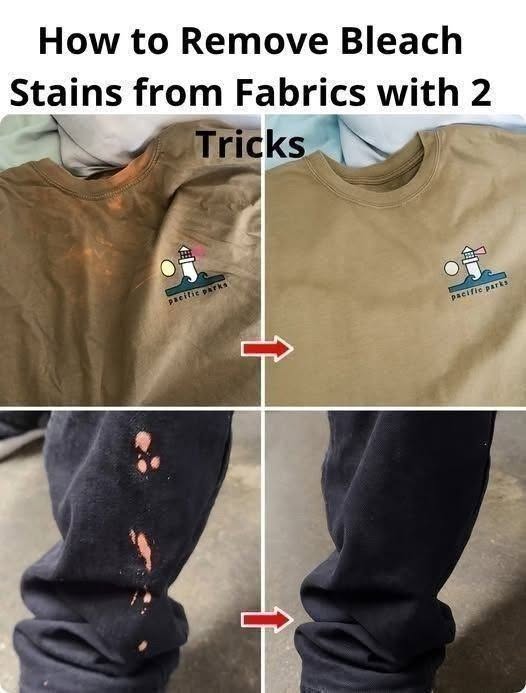
Bleach stains are different from ordinary stains: bleach removes or alters the fabric’s dye, so the color is often permanently changed. You usually can’t “remove” a bleach stain, but you can make it less noticeable by restoring or disguising the color.
Here are two common approaches:
1. Recolor the Bleached Area
If the fabric is colorfast and the bleach spot is small:
- Rinse the area thoroughly if the bleach exposure was recent.
- Use a fabric marker, fabric dye, or dye pen that closely matches the original color.
- Test the color on an inconspicuous area first.
- Apply the color in thin layers until it blends with the surrounding fabric.
This method works best on solid-colored fabrics.
2. Turn It into a Design
If the bleach spot is too large to hide:
- Use fabric paint or embroidery to cover the area.
- Add an iron-on patch or decorative appliqué.
- For casual clothing, you can intentionally create a tie-dye or distressed look by bleaching other areas in a controlled pattern (only if appropriate for the garment).
If the Bleach Spill Just Happened
If the fabric is still wet with bleach:
- Flush the area immediately with plenty of cool water.
- Wash the garment according to its care label.
Quick rinsing can stop further bleaching, but it usually cannot restore color that has already been lost.
What Not to Do
- Don’t mix bleach with ammonia, vinegar, or other household cleaners—they can produce hazardous gases.
- Don’t expect stain removers or regular detergents to reverse bleach damage; they cannot replace the missing dye.
Bottom line: Once bleach has removed a fabric’s color, the most effective solutions are to recolor the affected area with a matching fabric dye or marker, or creatively cover the spot with a decorative repair.