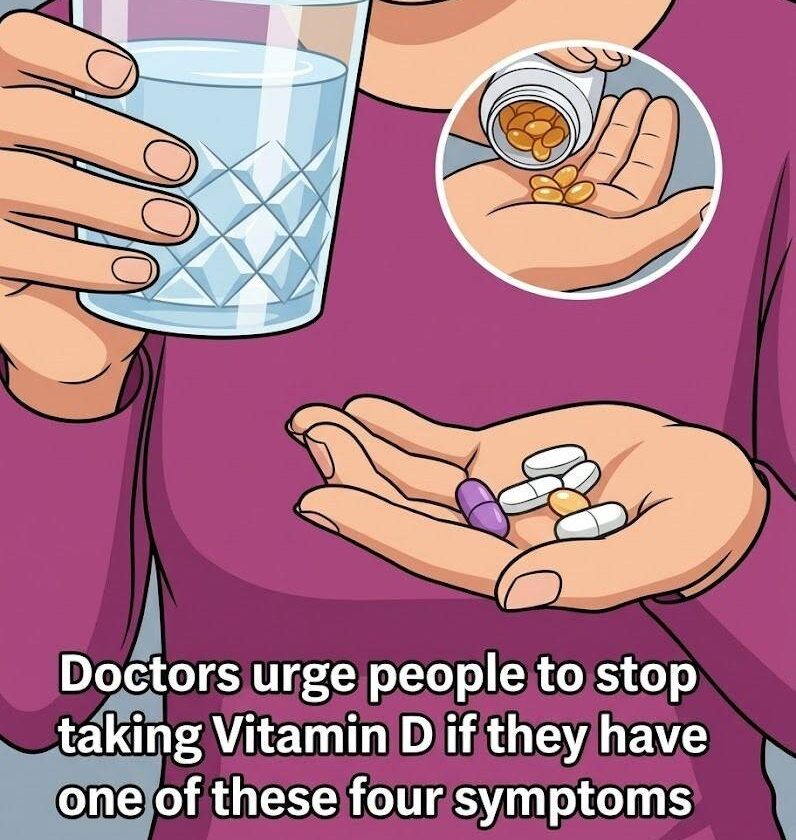
Vitamin D Safety — What doctors actually warn about
Vitamin D is important for:
- Bone health
- Calcium absorption
- Immune function
Toxicity is rare but can occur when levels become too high.
⚠️ Symptoms linked to excessive vitamin D (toxicity)
If vitamin D is too high, it can raise calcium levels in the blood. This may cause:
1. Persistent nausea or vomiting
- Often due to elevated calcium levels
- May be mistaken for stomach illness
2. Excessive thirst and frequent urination
- High calcium can affect kidney function
- Leads to dehydration-like symptoms
3. Weakness, fatigue, or confusion
- Elevated calcium can affect nerve and muscle function
4. Kidney-related problems
- Risk of kidney stones
- In severe cases, kidney strain or damage in people with pre-existing issues like Chronic kidney disease
🧠 Important context doctors emphasize
These symptoms are:
- ❌ Not specific to vitamin D alone
- ❌ Not a reason to panic-stop supplements immediately
- ✔ Only meaningful if someone is taking high doses over time
💊 Safe use vs. overdose
Safe use:
- Recommended daily intake (varies by age and health)
- Taken under medical guidance if deficient
Risky use:
- Very high doses for long periods (megadoses)
- Combining multiple supplements without monitoring
🚨 When to actually seek medical advice
Talk to a doctor if:
- You are taking high-dose vitamin D supplements
- You develop persistent nausea, weakness, or unusual thirst
- You have kidney disease or calcium disorders
A blood test can accurately measure vitamin D and calcium levels.