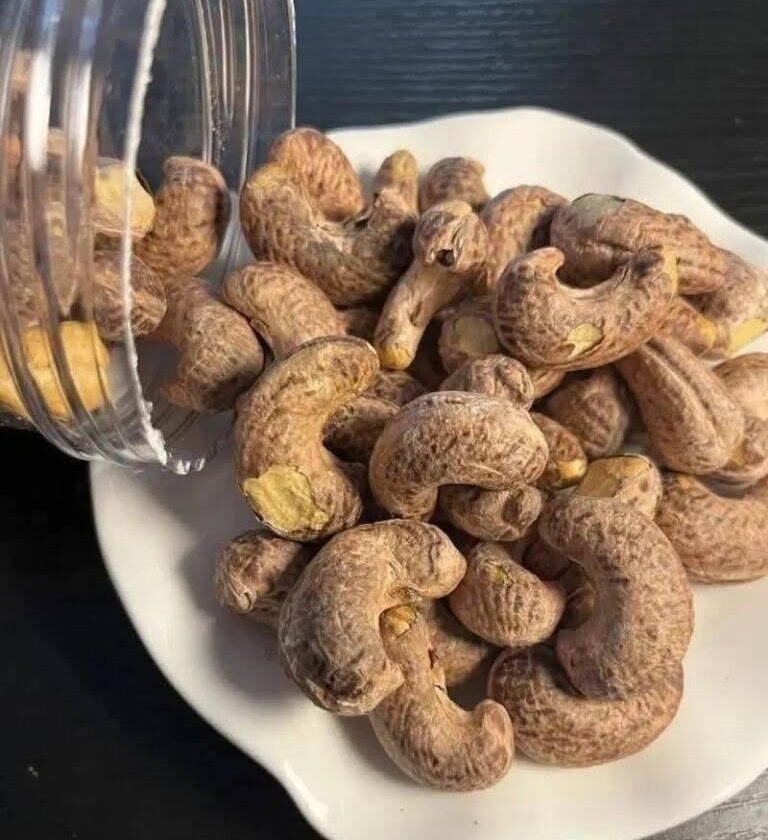
“Doctors Reveal That Eating Cashews Causes…” — What’s the Truth? 🥜
This type of headline is often used to create curiosity, but cashews do not cause one single dramatic effect in everyone. For most people, cashews can be a healthy part of a balanced diet when eaten in reasonable portions.
Potential benefits of eating cashews
❤️ May support heart health
- Cashews contain unsaturated fats that can support healthier cholesterol levels when they replace less healthy fats.
💪 Provide important nutrients
Cashews contain:
- Magnesium
- Copper
- Zinc
- Protein
- Healthy fats
🦴 Support bones and muscles
- Magnesium and other minerals in cashews contribute to normal muscle and bone function.
⚡ Help with fullness
- The combination of fat, protein, and fiber can help you feel satisfied after eating them.
Possible downsides
⚠️ Allergic reactions
People with tree nut allergies may have reactions ranging from mild symptoms (itching, hives) to severe allergic reactions requiring emergency care.
⚠️ High calories
Cashews are nutrient-dense but calorie-dense. Large amounts can contribute to unwanted weight gain.
⚠️ Digestive discomfort
Eating a lot at once may cause:
- Bloating
- Gas
- Stomach discomfort
⚠️ Salted or flavored varieties
Some packaged cashews contain high amounts of:
- Sodium
- Added sugars
- Extra oils
Plain, unsalted cashews are usually the better choice.
How many cashews are reasonable?
A typical serving is about 1 ounce (28 grams)—roughly a small handful (around 15–20 cashews, depending on size).