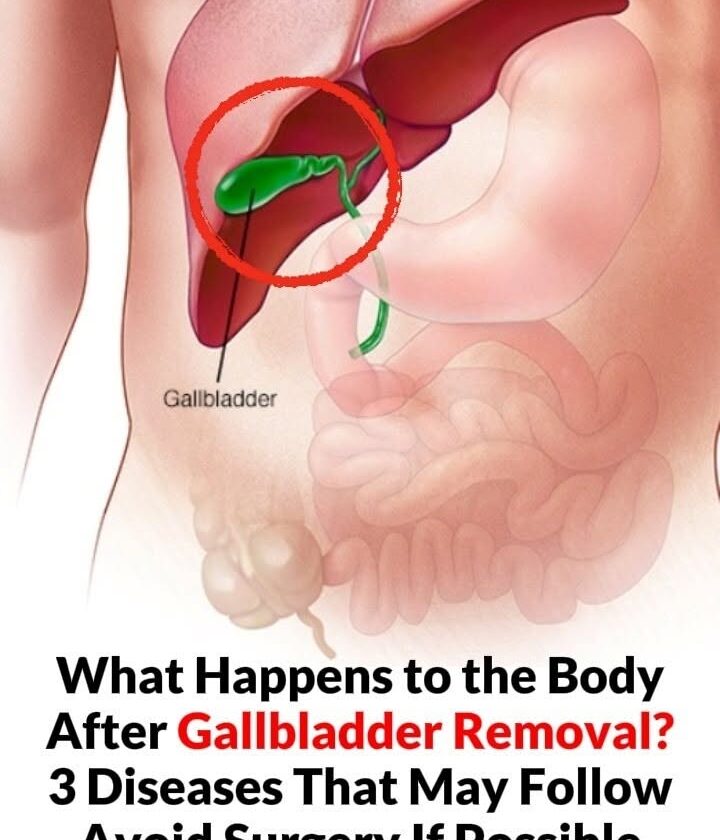
After Gallbladder Removal: 3 Conditions You Could Develop — and What to Know
Gallbladder removal surgery (cholecystectomy) is a common and generally safe procedure. It is usually recommended when gallstones cause repeated pain, inflammation, infection, or other complications. However, like any surgery, it can have possible side effects.
The idea that you should “avoid the surgery whenever possible” is too broad. For many people with serious gallbladder problems, surgery prevents dangerous complications. The decision depends on symptoms, risks, and medical advice.
1. Digestive changes (post-cholecystectomy symptoms)
What can happen:
- Bloating
- Gas
- Loose stools or diarrhea, especially after fatty meals
Why:
The gallbladder stores and releases bile to help digest fats. Without it, bile flows continuously into the intestine, which can affect digestion in some people.
What may help:
- Eating smaller meals
- Reducing very fatty or greasy foods
- Increasing fiber gradually
2. Bile-related diarrhea
What can happen:
Some people develop frequent loose stools after surgery because excess bile reaches the colon.
Treatment options:
A healthcare professional may recommend dietary changes or, in some cases, medicines that bind bile acids.
3. Bile duct problems (uncommon)
What can happen:
Rare complications may include:
- Bile duct injury
- Narrowing of bile ducts
- Retained stones in the bile ducts
These are uncommon but require medical attention if symptoms occur.
When gallbladder removal is often recommended:
Doctors commonly consider surgery for:
- Repeated gallbladder attacks
- Gallbladder infection (cholecystitis)
- Pancreatitis caused by gallstones
- Certain high-risk gallbladder conditions