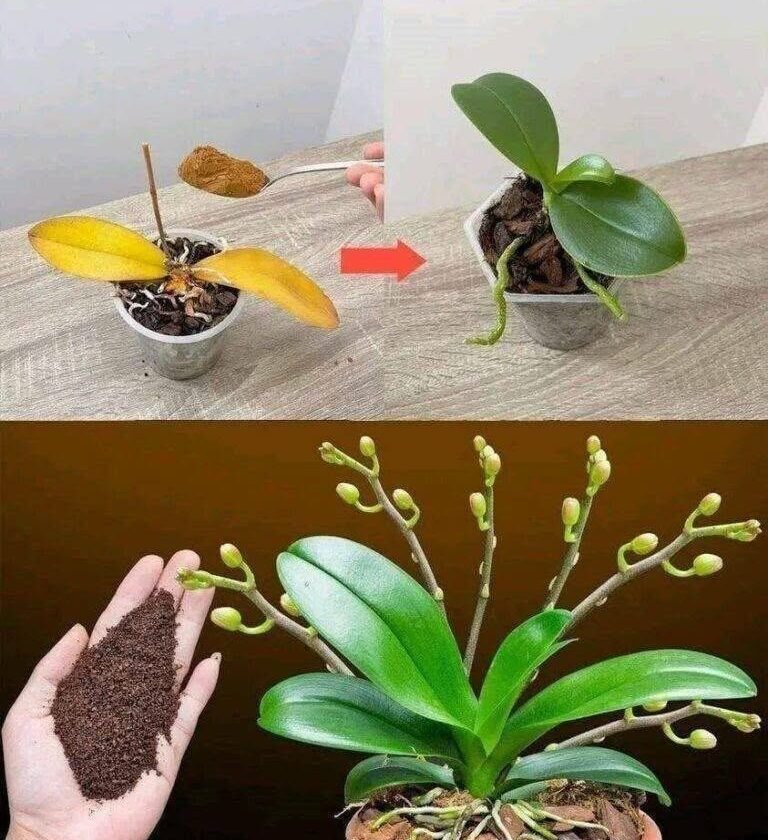
The claim “Just a teaspoon and your orchid will suddenly bloom with lots of flowers” is a common gardening headline, but there is no magic ingredient that reliably makes orchids burst into bloom overnight. Orchid flowering depends on factors such as the plant’s species, light, temperature changes, root health, and growing conditions.
Some tips that can genuinely help orchids flower:
- Provide the right light
- Most popular orchids (such as moth orchids, Phalaenopsis orchid) prefer bright, indirect light.
- Too little light is a common reason for poor blooming.
- Use appropriate fertilizer
- A balanced orchid fertilizer (often diluted to about half strength) during active growth can support flowering.
- Avoid overfertilizing, which can damage roots.
- Encourage a temperature difference
- Many orchids benefit from slightly cooler nighttime temperatures for several weeks to trigger flower spikes.
- Water correctly
- Let the potting medium partially dry between waterings.
- Avoid letting roots sit in standing water, which can cause rot.
- Check the roots and potting mix
- Healthy orchids usually need an airy mix (such as bark-based orchid mix) rather than regular garden soil.
Be cautious with viral “one teaspoon” remedies involving sugar, baking soda, vinegar, or household products—some may do little, and some can harm orchid roots.
If you tell me what orchid you have and what it looks like now (leaves, roots, whether it has a flower spike), I can suggest more specific steps to encourage blooming.