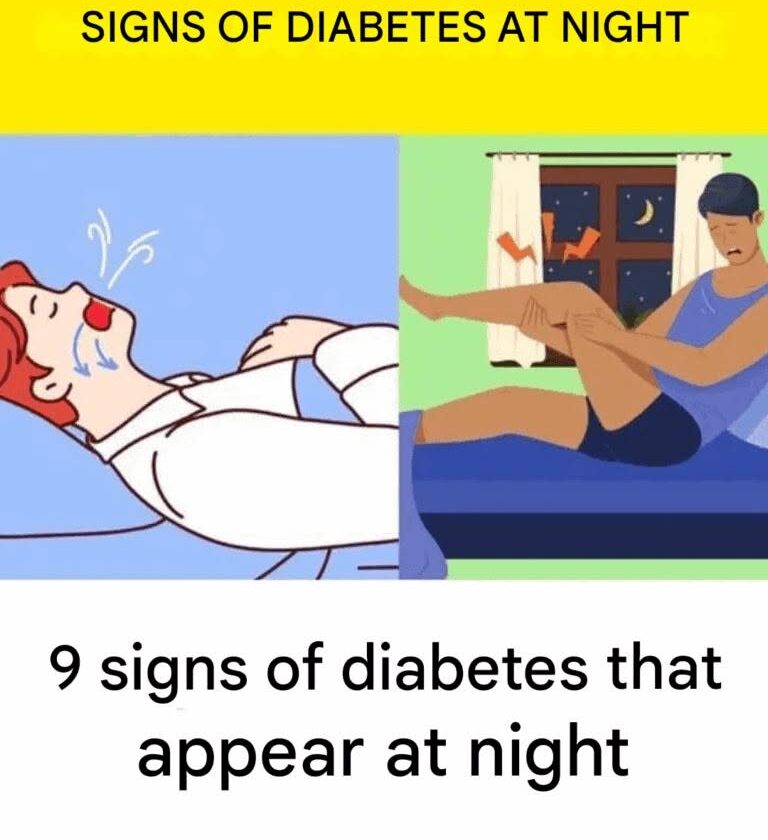
Diabetes symptoms can sometimes become more noticeable at night because blood sugar levels, hormones, meals, and fluid balance change while you sleep. These signs are not proof of diabetes by themselves, but repeated nighttime symptoms may be worth checking with a healthcare professional.
9 possible nighttime signs of diabetes
1. Waking up often to urinate
High blood sugar can cause the kidneys to remove extra glucose through urine, leading to:
- Frequent nighttime bathroom trips
- Larger amounts of urine than usual
2. Excessive thirst at night
Loss of fluids from frequent urination can cause:
- Dry mouth
- Strong thirst
- Drinking water repeatedly during the night
3. Night sweats
Blood sugar changes—especially drops in glucose for people taking certain diabetes medicines—can trigger:
- Sweating
- Shaking
- Feeling hot or clammy
4. Trouble sleeping
Discomfort from thirst, urination, itching, or glucose fluctuations may cause:
- Frequent waking
- Restless sleep
5. Leg cramps or tingling sensations
Diabetes-related nerve changes or circulation problems may contribute to:
- Burning sensations
- Pins and needles
- Foot discomfort at night
6. Increased hunger after waking or overnight
Some people with unstable blood sugar may wake up feeling unusually hungry.
7. Blurry vision in the morning
Blood glucose changes can temporarily affect the lens of the eye, causing vision changes.
8. Unusual fatigue despite sleeping
High blood sugar can prevent the body from using glucose effectively, which may leave you tired.
9. Slow healing or repeated infections
Diabetes can increase the risk of:
- Skin infections
- Urinary infections
- Slow-healing cuts
When to consider getting checked
A healthcare professional can evaluate diabetes with tests such as:
- Fasting blood glucose
- HbA1c (average blood sugar over about 2–3 months)
- Urine tests when appropriate
Seek urgent medical care if symptoms include confusion, severe weakness, vomiting, difficulty breathing, or signs of severe dehydration.
Having one or more of these signs does not necessarily mean you have diabetes—many other conditions can cause similar symptoms.