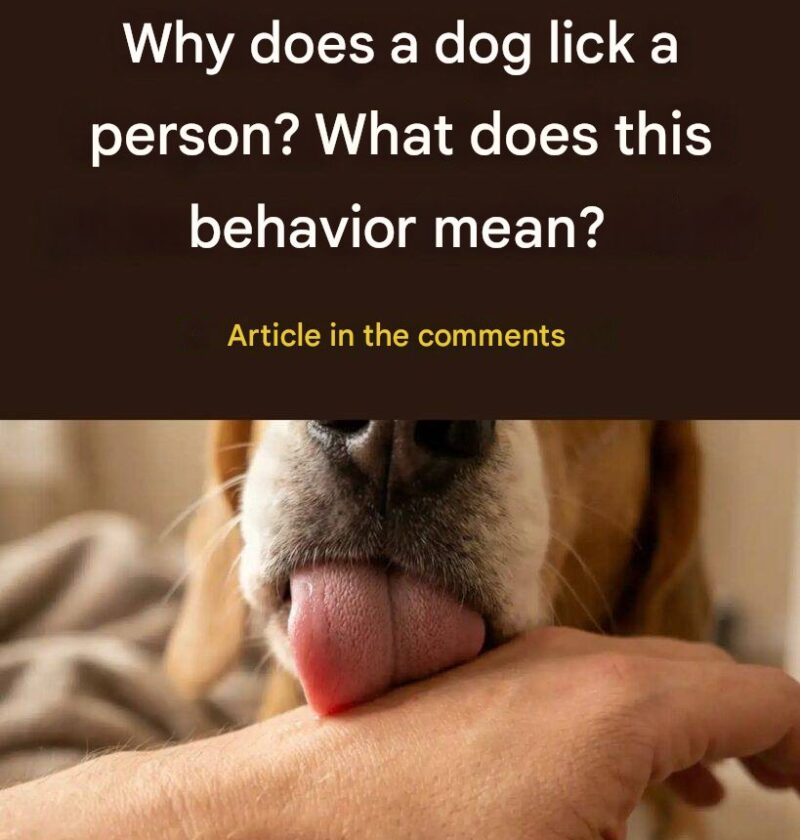
When a dog licks a person, it usually isn’t random—it’s a form of communication and behavior that has several possible meanings depending on context.
One of the most common reasons is social bonding. Dogs lick as part of their natural social behavior, similar to grooming in packs. If your dog licks you calmly, especially around your hands or face, it can be a way of showing familiarity and connection. In that sense, it’s less about “affection” in a human emotional way and more about reinforcing social closeness.
Licking is also tied to curiosity and sensory exploration. A dog’s sense of taste and smell are closely linked, and your skin carries interesting scents—salt from sweat, food residue, or even lotions. Many dogs lick simply because they’re gathering information about you.
Attention-seeking is another big factor. If a dog licks you and you respond—by talking, petting, or even pushing them away—they learn that licking gets a reaction. Over time, it can become a learned behavior for getting attention.
Sometimes licking reflects emotional states like stress, excitement, or mild anxiety. Repetitive licking can act as a self-soothing behavior, similar to how some animals pace or fidget.
There’s also a lingering misconception that licking is about “dominance” or trying to control a person. That idea is largely outdated in modern animal behavior science. In most cases, licking is not about dominance at all—it’s about communication, comfort, or learned habit.
If the licking becomes excessive or compulsive, especially if it seems linked to anxiety or restlessness, it can be worth observing the situation more closely or consulting a veterinarian, since it may point to stress or an underlying issue.
If you want, tell me when your dog usually licks you (like during greetings, when you’re eating, or randomly), and I can help narrow down what it most likely means in your specific case.