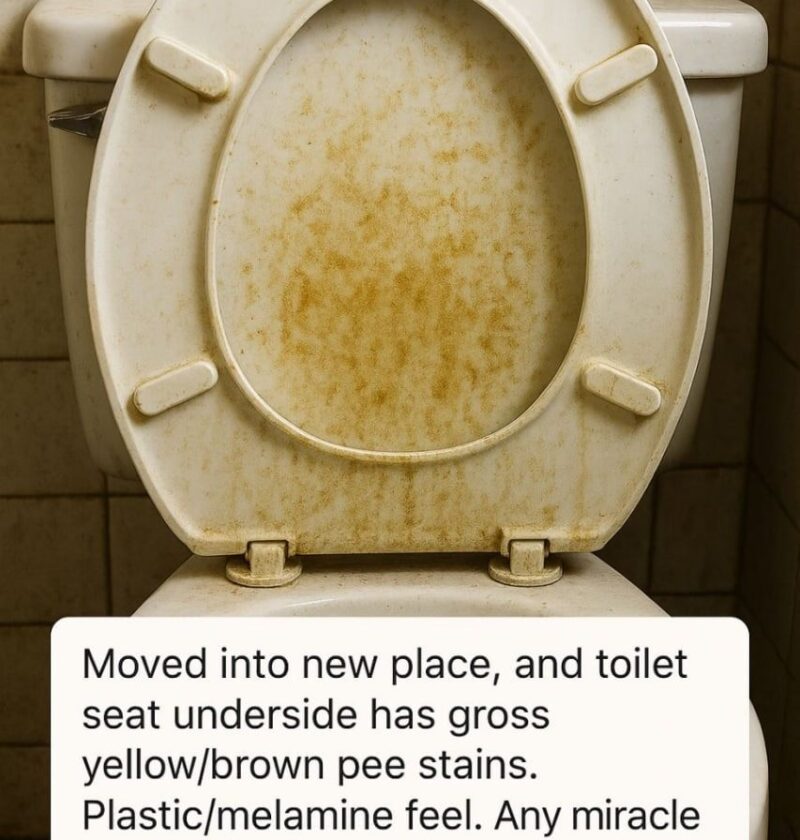
You probably don’t need a “miracle” cleaner, but you do need something stronger than normal bathroom spray plus a bit of patience. Yellow/brown staining on the underside of plastic toilet seats is usually urine scale + aged biofilm that has bonded into the plastic surface.
Here are the most effective approaches, from mild to aggressive:
1) Start with hot vinegar soak (safe baseline)
- Use white vinegar
- Soak paper towels in it and press them onto the stains (or spray heavily)
- Leave 30–60 minutes
- Scrub with a non-scratch sponge
This works best on newer or lighter staining, not deeply embedded marks.
2) Baking soda + vinegar paste (more scrubbing power)
- Sprinkle Baking soda
- Spray or pour vinegar over it to form a paste
- Let it fizz for 10–15 minutes
- Scrub firmly with a sponge or old toothbrush
Good for lifting surface discoloration.
3) Hydrogen peroxide (better for organic staining)
- Apply 3% hydrogen peroxide
- Let it sit 20–30 minutes
- Scrub and rinse
This helps break down urine-related staining better than vinegar alone.
4) Oxygen bleach soak (strongest safe option)
- Use an oxygen-based cleaner (sodium percarbonate)
- Dissolve in warm water
- Soak the seat if removable for a few hours
This is often the “last stop” before replacement.
5) Magic eraser (for final cleanup)
- Works well on plastic surfaces
- Use gently to avoid dulling or scratching
When replacement is actually the better choice
If after all this:
- Stains are still visible
- Surface feels rough or permanently discolored
Then the plastic has likely absorbed the staining into micro-scratches, and replacement is the most hygienic solution (usually not expensive).
If you want, tell me whether the seat is removable and what cleaning products you already have, and I can give you a quick “best combo” plan so you don’t waste effort.