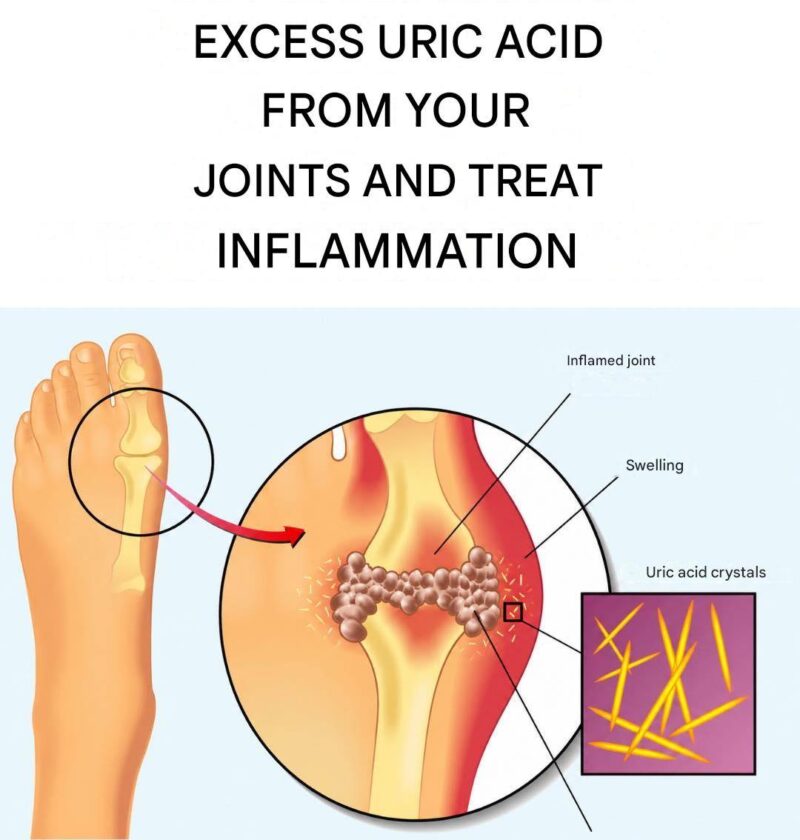
High uric acid and joint inflammation are most commonly linked to Gout, a condition where uric acid crystals build up in joints and cause sudden pain, swelling, and redness—often in the big toe, ankle, or knee.
1) Lowering uric acid (long-term control)
The goal is to reduce uric acid in the blood so crystals stop forming.
Medicines (prescribed by a doctor):
- Allopurinol – most common long-term uric acid reducer
- Febuxostat – alternative if allopurinol isn’t suitable
- Sometimes probenecid (helps kidneys remove uric acid)
These are not painkillers—they are long-term “prevention” medicines.
2) Reducing joint inflammation (during flare-ups)
When a joint is swollen and painful:
- Ibuprofen or other NSAIDs (reduces pain and swelling)
- Colchicine (often used specifically for gout attacks)
- In severe cases: corticosteroids prescribed by a doctor
Also:
- Rest the joint
- Apply ice (10–15 minutes at a time)
- Keep the joint elevated
3) Diet changes (very important)
Uric acid comes from breakdown of purines in food.
Avoid or reduce:
- Red meat (beef, mutton)
- Organ meats (liver, kidney)
- Sardines, anchovies, shellfish
- Sugary drinks (especially fructose/sodas)
- Alcohol (especially beer)
Helpful foods:
- Low-fat dairy (milk, yogurt)
- Eggs
- Vegetables (most are safe, even spinach in moderate amounts)
- Whole grains
- Coffee (in moderation may help lower risk in some studies)
4) Lifestyle habits that help
- Drink plenty of water (aim for pale urine)
- Lose weight gradually if overweight (rapid weight loss can worsen gout)
- Exercise regularly but avoid stressing inflamed joints during attacks
- Manage blood pressure and diabetes if present
5) When to see a doctor urgently
- Severe pain with fever
- A single hot, red, extremely swollen joint
- Repeated attacks
- Kidney stone symptoms (back pain, blood in urine)
If you want, tell me your symptoms (which joint, how often attacks happen, any lab uric acid level), and I can help you figure out whether it sounds like gout or another type of arthritis and what to do next.