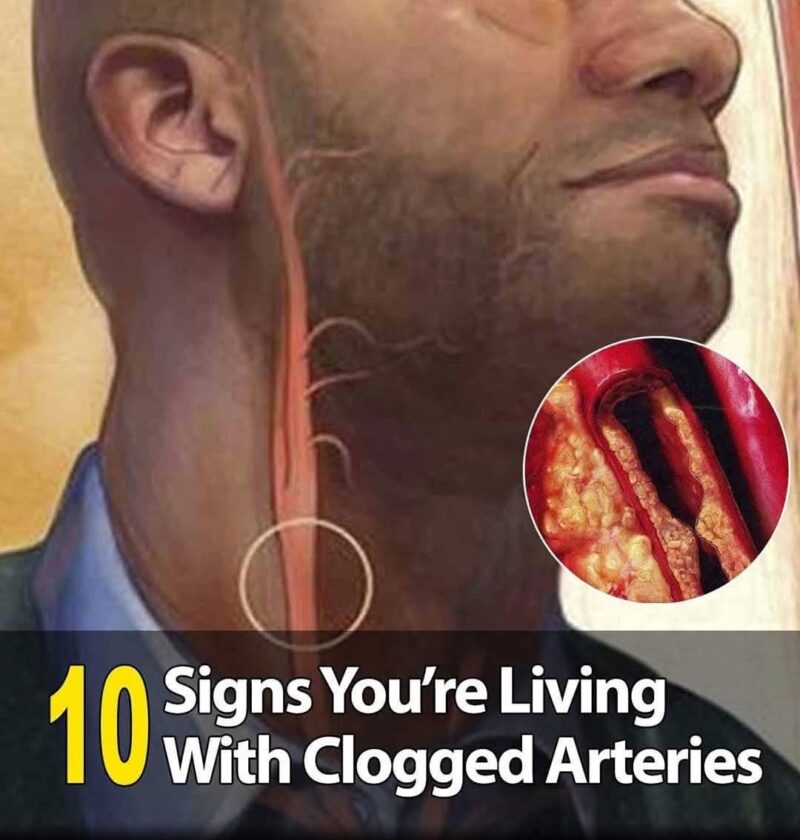
“Clogged arteries” is a popular phrase, but medically it usually refers to atherosclerosis, a condition where fatty plaques build up in blood vessels over time. One common form is Atherosclerosis.
It’s important to know: many people have no symptoms until a serious event (like a heart attack or stroke). Still, there are some warning signs that may appear when blood flow is reduced.
Here are 10 possible symptoms that should not be ignored:
1) Chest pain or pressure (angina)
- Tightness, heaviness, or squeezing in the chest
- Often triggered by activity or stress
2) Shortness of breath
- Especially during mild activity or lying down
3) Fatigue or low energy
- Unusual tiredness even with normal daily tasks
4) Pain in legs while walking
- Cramping or aching (often called “claudication”)
- Improves with rest
5) Numbness or weakness in limbs
- Reduced blood flow to arms or legs
6) Cold hands or feet
- Poor circulation in extremities
7) Slow-healing wounds
- Cuts or sores take longer than normal to heal
8) Dizziness or lightheadedness
- Especially if brain blood flow is reduced
9) Heart palpitations or irregular heartbeat
- Feeling like your heart is racing or skipping beats
10) Sudden neurological symptoms (emergency)
- Face drooping, speech difficulty, or one-sided weakness
- Could indicate a stroke or mini-stroke
Important reality check
- Early atherosclerosis often has no symptoms at all
- These signs can also be caused by many other conditions
- Diagnosis requires medical tests (blood tests, ECG, ultrasound, etc.)
Bottom line