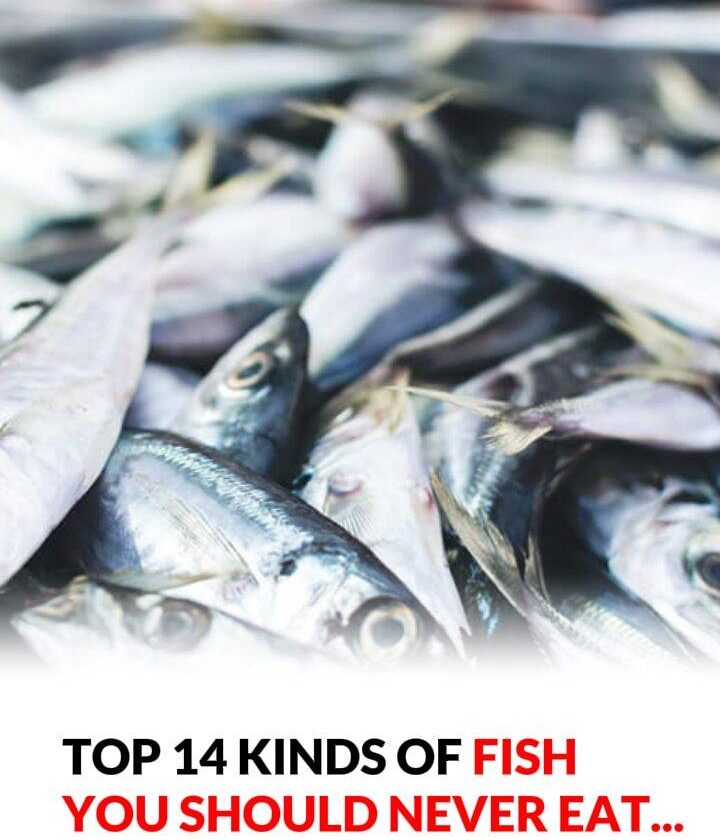
That title is classic clickbait. It’s trying to trigger panic without specifying which fish or what actual risk. In real nutrition science, there is no single fish that everyone must “stop eating immediately.” Risk depends on species, source, and how often you eat it.
Here’s what the science actually says.
Fish can be both very healthy and, in a few cases, carry contaminants—so the goal is not avoidance, but smart choices.
The real concern: mercury (not “all fish”)
Some large predatory fish accumulate more mercury over time. These are the main ones to limit, especially for pregnant people and children:
- Shark
- Swordfish
- King mackerel
- Tilefish (some regions)
These are not “poison,” but high-frequency consumption can raise mercury exposure.
Generally safe + very healthy options
Most commonly eaten fish are considered safe in normal portions:
- Salmon
- Sardines
- Trout
- Herring
- Anchovies
- Catfish (including farmed varieties)
These tend to be high in omega-3 fats and low in mercury.
The real risks people overhype online
Some videos exaggerate or distort:
- “Farmed fish is toxic” → depends on regulation and feed quality
- “All tuna is dangerous” → albacore has more mercury; light tuna has much less
- “Fish causes heavy metal poisoning” → only happens with very high, repeated intake of specific species
How often is actually safe?
For most healthy adults:
- 2–3 servings per week of low-mercury fish is widely considered beneficial
- Variety matters more than elimination
Bottom line
There is no scientific basis for a blanket warning like “stop eating fish immediately.”
What is real is a simple rule:
Eat fish regularly, but choose lower-mercury species most of the time and avoid overdoing high-mercury fish.
If you want, tell me what fish you usually eat in Multan/Pakistan markets (like rohu, tilapia, pomfret, etc.), and I can break down which ones are actually best for health and which ones to limit.