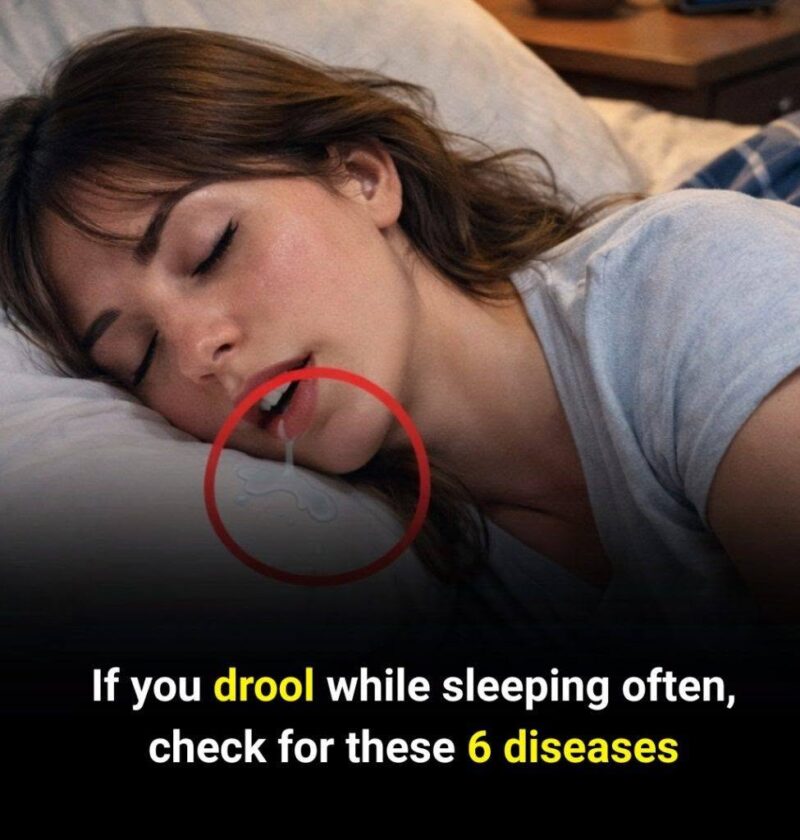
That headline is partly true but exaggerated. Nighttime drooling (sleep drooling or sialorrhea during sleep) is usually harmless, but in some cases it can be linked to underlying issues.
Here are 6 conditions that can contribute to nighttime drooling:
😴 1. Mouth breathing (very common)
- Blocked nose from allergies, sinus issues, or a cold
- You sleep with your mouth open → saliva leaks out
✔ Most common and usually not serious
🫁 2. Sleep apnea
- Breathing repeatedly stops during sleep
- Causes open-mouth breathing and drooling
⚠ Often accompanied by loud snoring and daytime fatigue
(Condition: Obstructive Sleep Apnea)
🧠 3. Neurological conditions (less common)
- Conditions affecting muscle control can reduce swallowing during sleep
Examples include stroke or Parkinson’s disease
(Condition: Parkinson’s disease)
🤧 4. Sinus or allergy problems
- Chronic nasal blockage forces mouth breathing
- More drooling during sleep or when lying flat
🧬 5. Acid reflux (GERD)
- Stomach acid irritation increases saliva production as a protective response
- Can worsen at night when lying down
(Condition: Gastroesophageal reflux disease)
💊 6. Medication effects
Some medicines increase saliva production or affect swallowing control (e.g., certain psychiatric or neurological drugs).
🚫 When it’s usually NOT serious
Night drooling is often harmless if:
- It happens occasionally
- You have no other symptoms
- It’s related to a cold or sleeping position
⚠️ See a doctor if you also have:
- Loud snoring + choking at night
- Daytime sleepiness
- Trouble swallowing
- New drooling while awake
- Facial weakness