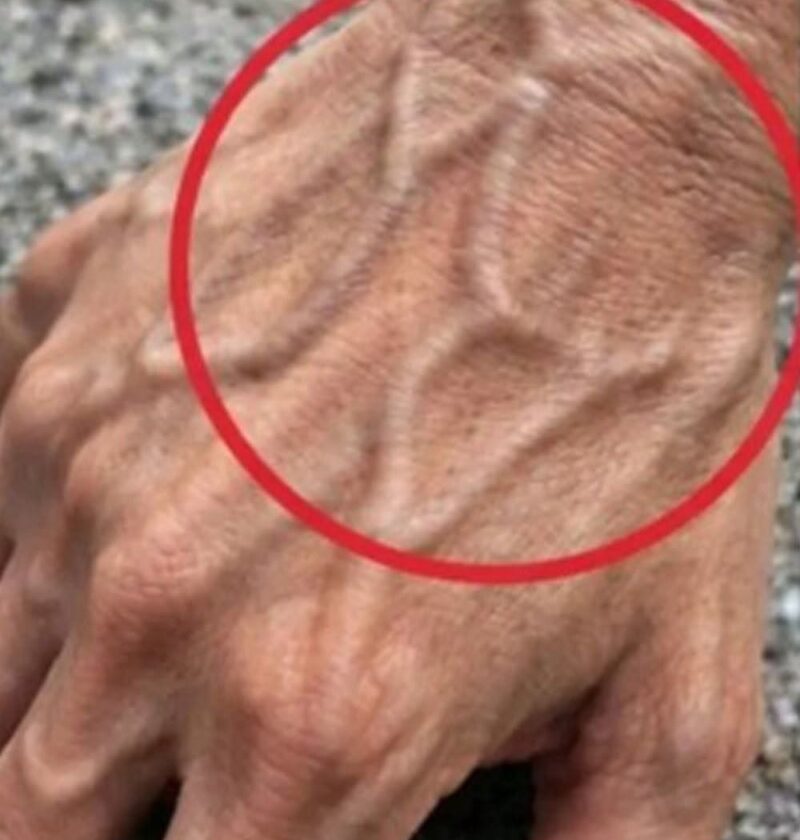
If You Have Visible Veins, What Does It Really Mean?
Visible veins are common and, in many cases, completely normal. While social media posts often suggest that prominent veins reveal a specific health condition, the reality is usually much simpler.
Why Are Some People’s Veins More Visible?
Several factors can make veins easier to see beneath the skin:
1. Low Body Fat
People with lower levels of body fat often have more visible veins because there is less tissue covering them.
2. Genetics
Some individuals naturally have veins that lie closer to the surface of the skin, making them more noticeable.
3. Exercise and Muscle Development
Athletes and people who engage in regular strength training often develop more prominent veins due to increased muscle size and blood flow.
4. Aging
As people age, the skin becomes thinner and loses some elasticity, allowing veins to show more clearly.
5. Warm Temperatures
Heat can cause blood vessels to expand, making veins temporarily appear larger and more visible.
Does Having Visible Veins Mean You’re Unhealthy?
Usually not. Visible veins alone are generally not a sign of illness. In fact, they are often seen in healthy, active individuals.
However, if veins are accompanied by symptoms such as:
- Pain
- Swelling
- Tenderness
- Skin discoloration
- A feeling of heaviness in the legs
they may be related to conditions such as Varicose veins or other circulatory issues and should be evaluated by a healthcare professional.
Common Myths About Visible Veins
Visible veins do not automatically mean:
- You have poor circulation
- Your blood is too thin
- You are dehydrated
- You have high blood pressure
- You have a serious disease
These claims are not supported by medical evidence.
When Should You Seek Medical Advice?
Consider consulting a healthcare professional if visible veins are accompanied by:
- Sudden swelling in one limb
- Persistent pain
- Warmth or redness over a vein
- Skin ulcers or wounds near the ankles
- Rapid changes in vein appearance
The Bottom Line
For most people, visible veins are a normal result of genetics, body composition, exercise, aging, or temperature changes. While certain vein-related conditions can cause symptoms, simply having noticeable veins is usually not a cause for concern. If you experience pain, swelling, or other unusual symptoms, a