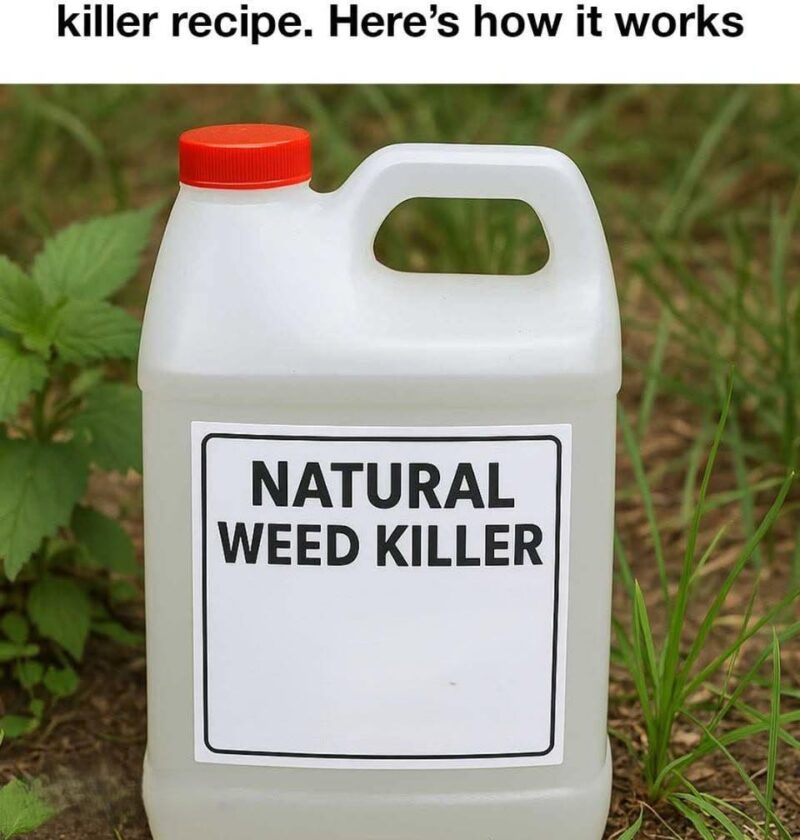
That kind of line is usually a social-media gardening hook, and while some DIY weed killers can damage weeds, they’re often oversold as “miracle solutions.”
There is no homemade mix that reliably kills every weed permanently without trade-offs like soil damage or regrowth.
Common DIY “Weed Killer” Recipes (and what actually happens)
1. Vinegar-based spray
Vinegar is one of the most common ingredients used.
What it does:
- Burns the leaves of young weeds
- Works best in hot, sunny weather
Limitation:
- Usually does not kill roots
- Weeds often grow back
2. Salt mixture
Salt is sometimes added for stronger effect.
What it does:
- Dehydrates plant cells
- Can kill small weeds on contact
Big problem:
- Can damage soil for a long time
- May prevent anything from growing in that area
3. Boiling water
Water (heated) is also used.
What it does:
- Kills surface plant tissue instantly
- Works well for cracks in pavement
Limitation:
- No root removal → regrowth is common
4. Soap + vinegar mix
Dish soap is sometimes added to help the spray stick to leaves.
What it does:
- Improves contact with plant surface
- Slightly increases leaf damage
Limitation:
- Still not a long-term solution
Why these recipes “seem to work”
- Leaves die quickly → looks effective
- Roots stay alive → weeds return later
- Social media shows only short-term results
What actually works long-term
If the goal is lasting weed control:
- Mulching (blocks sunlight)
- Landscape fabric under gravel
- Regular hand removal (roots included)
- Targeted herbicides (if appropriate and used safely)
- Dense planting to crowd weeds out