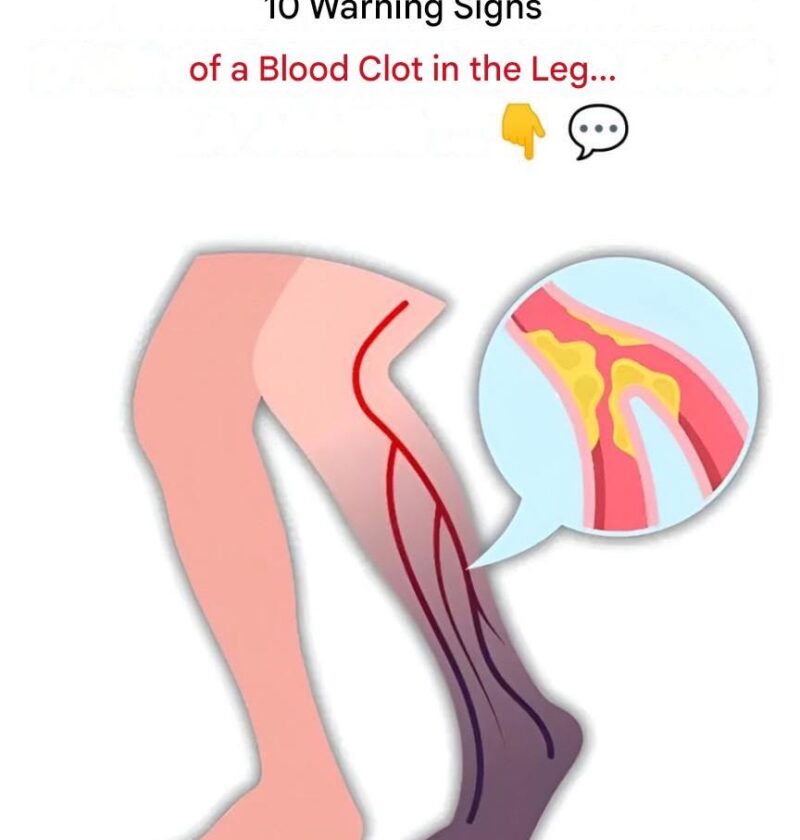
A blood clot in a deep vein of the leg is called Deep Vein Thrombosis (DVT). It can be serious because part of the clot can break off and travel to the lungs, causing a Pulmonary Embolism.
10 Common Signs of a Blood Clot in the Leg
Not everyone has symptoms, but common signs include:
- Swelling in one leg
- Often affects the calf, ankle, or entire leg.
- Usually occurs on one side.
- Leg pain or tenderness
- May feel like a cramp, soreness, or aching pain.
- Often starts in the calf.
- Warmth in the affected area
- The skin over the clot may feel warmer than surrounding areas.
- Red or discolored skin
- The skin may appear red, bluish, or darker than usual.
- Enlarged or visible veins
- Surface veins may become more noticeable.
- Pain that worsens when standing or walking
- Movement can aggravate symptoms.
- Calf tenderness when touched
- The area may be sensitive or painful to pressure.
- A feeling of tightness or fullness in the leg
- Some people describe a sensation of pressure.
- Unexplained leg fatigue or heaviness
- The affected leg may feel unusually heavy.
- Symptoms affecting only one leg
- DVT commonly occurs in one leg rather than both.
When to Seek Urgent Medical Care
Get immediate medical attention if leg symptoms are accompanied by:
- Sudden shortness of breath
- Chest pain, especially when breathing deeply
- Coughing up blood
- Rapid heartbeat
- Fainting
These may indicate a Pulmonary Embolism, which is a medical emergency.
Risk Factors for DVT
Common risk factors include:
- Recent surgery or hospitalization
- Prolonged immobility (long flights, bed rest)
- Cancer
- Pregnancy and the postpartum period
- Smoking
- Obesity
- Increasing age
- Certain inherited clotting disorders
- Use of estrogen-containing medications
Important Note
Many of these symptoms can also be caused by less serious conditions such as muscle strains, varicose veins, or infections. However, if you develop new swelling, pain, warmth, or redness in one leg, especially if you have DVT risk factors, prompt medical evaluation is recommended because DVT cannot be reliably diagnosed based on symptoms alone.