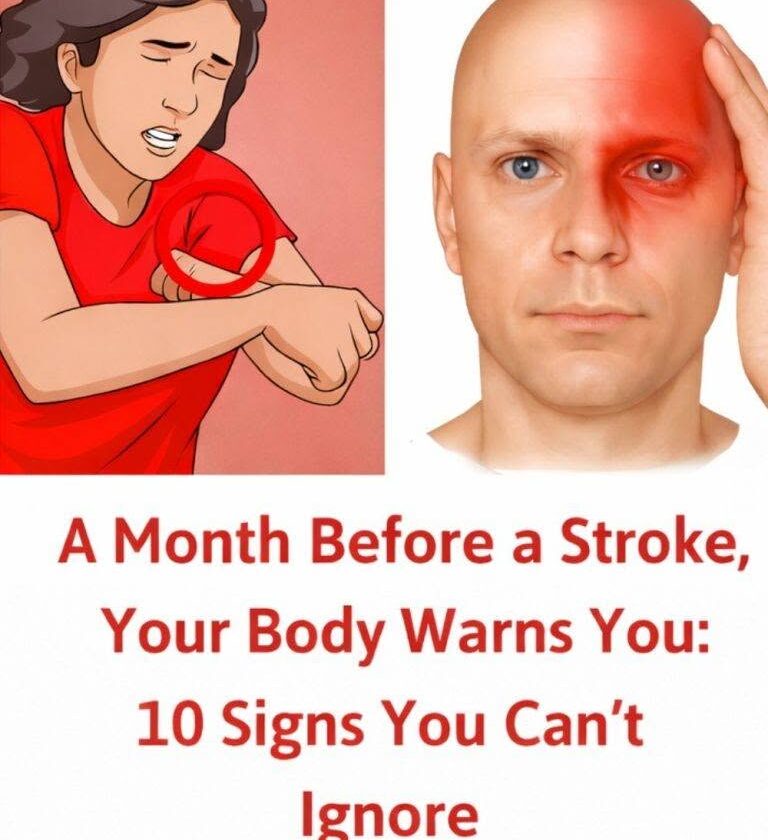
Headlines like “a month before a stroke your body warns you” are oversimplified. A Stroke can sometimes be preceded by warning signs—but they don’t reliably appear a full month in advance, and sometimes there is no warning at all.
However, there are important early warning symptoms that can occur days, weeks, or suddenly before a major stroke, especially from a transient ischemic attack (TIA) (“mini-stroke”).
⚠️ 10 warning signs that should never be ignored
1. Sudden weakness or numbness
Especially on one side of the face, arm, or leg.
2. Facial drooping
One side of the face looks uneven when smiling.
3. Slurred speech or confusion
Difficulty speaking or understanding others.
4. Sudden vision problems
- Blurred vision
- Loss of vision in one eye
- Double vision
5. Severe dizziness or loss of balance
Trouble walking or coordination issues.
6. Sudden severe headache
Often described as “the worst headache of life,” especially in hemorrhagic stroke.
7. Tingling or loss of sensation
Usually affecting one side of the body.
8. Difficulty understanding speech
Words may sound confusing or meaningless.
9. Sudden fatigue or weakness
Unusual exhaustion without clear reason.
10. Brief stroke-like episodes (TIA)
Symptoms that:
- Come and go within minutes or hours
- Fully resolve but are a major warning sign
🧠 The most important concept: TIA
A transient ischemic attack (TIA) is often a true warning sign that a full stroke risk is high in the near future.
Even if symptoms disappear, it is a medical emergency.
🚨 What to do immediately (FAST rule)
If any of these happen, act fast:
- Face drooping
- Arm weakness
- Speech difficulty
- Time to call emergency services
⚠️ Important reality check
- There is no guaranteed “1-month warning system” for stroke
- Some strokes happen suddenly without any prior symptoms
- Risk factors matter more than “early signs”
Major risk factors include:
- Hypertension
- Diabetes
- Smoking
- High cholesterol
- Heart disease
🧠 Bottom line
Instead of relying on “10 hidden signs,” the real focus should be:
- Controlling blood pressure
- Managing diabetes and cholesterol
- Recognizing sudden neurological symptoms immediately
If you want, I can give you a stroke risk checklist (very practical) or a diet and lifestyle plan to reduce stroke risk naturally.