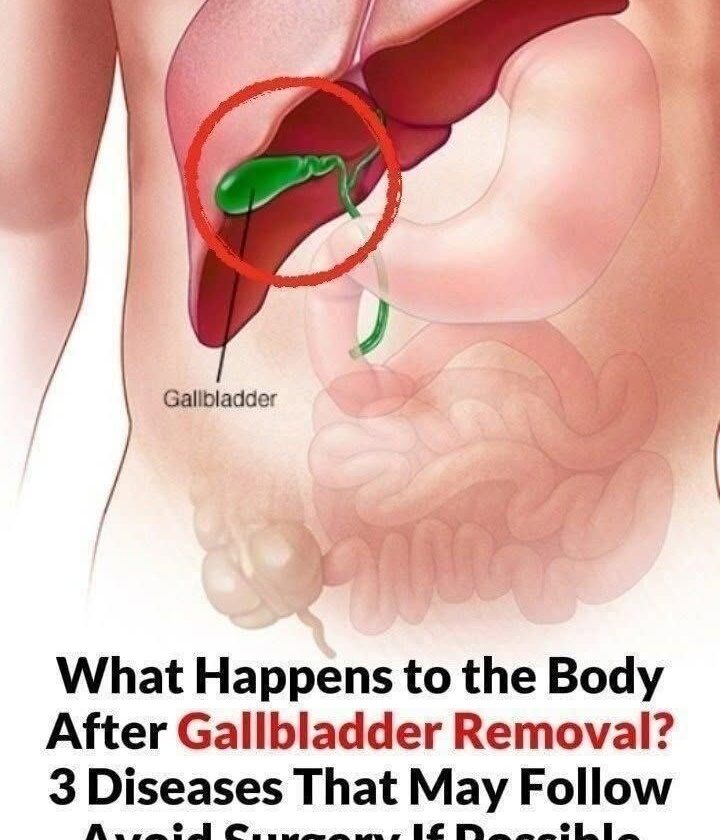
The claim “you should avoid gallbladder removal when possible” is misleading in most medical situations.
A Gallstones or inflamed gallbladder can cause serious complications (infection, pancreatitis, bile duct blockage). When symptoms are significant, surgery—called cholecystectomy—is usually the standard and safest long-term treatment, not something to avoid blindly.
That said, it’s also true that some people develop post-surgery digestive issues. These are real, but they are not common enough to outweigh surgery when it is medically needed.
Here are 3 conditions or issues that can happen after gallbladder removal:
1) Post-cholecystectomy syndrome
Some people continue to have or develop symptoms like:
- Abdominal pain
- Bloating
- Indigestion
- Nausea or food intolerance
This is called post-cholecystectomy syndrome, and it may be due to bile flow changes, leftover stones, or unrelated digestive conditions that were present before surgery.
2) Bile acid diarrhea
After gallbladder removal, bile flows continuously into the intestine instead of being stored and released in controlled amounts.
In some people, this leads to:
- Frequent loose stools
- Urgency after eating
- Fatty food intolerance
This condition is known as Bile acid diarrhea. It is usually treatable with medications that bind bile acids.
3) Sphincter of Oddi dysfunction
The Sphincter of Oddi controls bile flow into the intestine. After surgery, some patients develop spasms or dysfunction in this valve, leading to:
- Upper abdominal pain
- Pain after eating
- Sometimes abnormal liver/pancreatic enzyme tests
This is called Sphincter of Oddi dysfunction and is relatively uncommon but can be difficult to diagnose.
So… should you avoid gallbladder surgery?
In most cases, no.
Doctors usually recommend gallbladder removal when:
- There are repeated gallstone attacks
- Infection or inflammation occurs
- There is risk of serious complications
Leaving a diseased gallbladder untreated can be more dangerous than surgery.
Bottom line
- Yes, some digestive changes can happen after removal
- But serious long-term complications are not common
- Surgery is generally recommended when gallbladder disease is symptomatic or risky
If you want, I can break down natural management options for mild gallstones vs when surgery becomes necessary so you can see where the real decision line is.