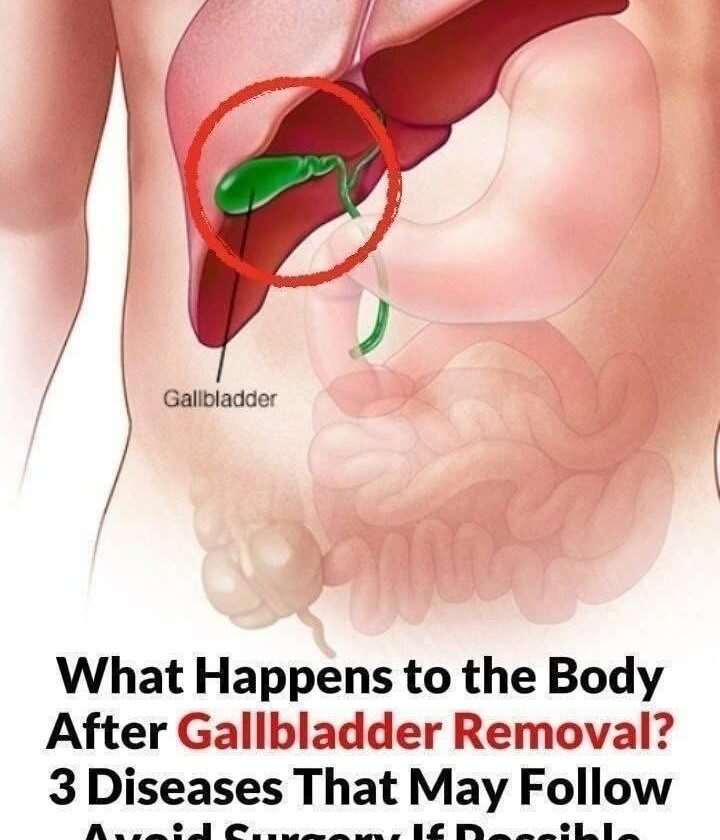
That headline is strongly biased. Gallbladder removal is not something doctors recommend to “avoid when possible” in general—it’s usually done because the risks of keeping a diseased gallbladder are higher than the risks of surgery.
The procedure is called Cholecystectomy, and it is one of the most common and safest surgeries worldwide.
First: when gallbladder removal is actually needed
Doctors usually recommend it for:
- Recurrent painful gallstones
- Gallbladder inflammation (cholecystitis)
- Blocked bile ducts
- Pancreatitis caused by gallstones
- Risk of infection or rupture
Leaving these untreated can lead to serious complications.
After gallbladder removal: what can happen
The gallbladder stores bile. After removal, bile flows continuously into the intestine. Most people adapt well, but a minority develop issues:
1. Post-cholecystectomy diarrhea
Some people experience frequent loose stools because bile flows more constantly into the gut.
- Usually mild
- Often improves over time or with diet changes
2. Bile reflux or indigestion symptoms
A small number of patients get:
- Bloating
- Nausea
- Upper abdominal discomfort
This is sometimes called post-cholecystectomy syndrome.
3. Bile acid malabsorption
Excess bile in the intestine can irritate the colon, leading to chronic diarrhea in some cases. It can often be treated with medication.
Important reality check
- Most people (around 80–90%) live completely normal lives after surgery
- Serious long-term complications are uncommon
- Modern laparoscopic surgery is low-risk and usually outpatient
The “avoid surgery if possible” claim — when it’s true and false
True in a limited sense:
If someone has mild, asymptomatic gallstones, doctors may sometimes recommend watchful waiting.
False in general:
If gallstones are causing symptoms or complications, delaying surgery can increase risk of:
- Infection
- Pancreatitis
- Emergency surgery (which is riskier)
Bottom line
Gallbladder removal isn’t something to fear or avoid blindly. It’s a risk–benefit decision, and in many cases, it prevents more dangerous complications than it creates.
If you want, tell me what symptoms or situation you’re dealing with, and I can explain whether surgery is typically recommended in that specific case.