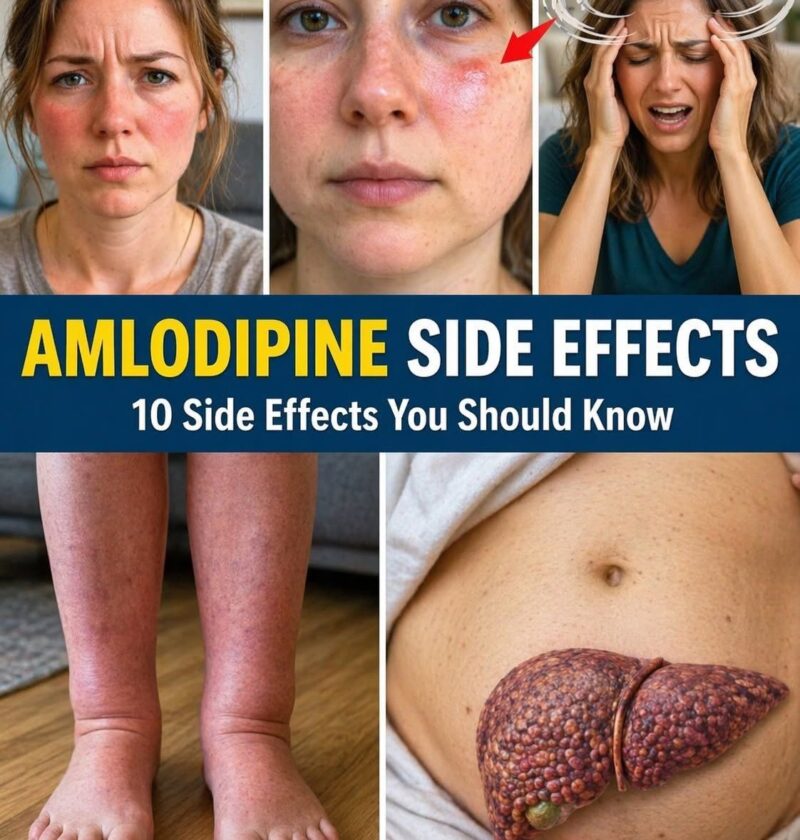
If you mean the claim “Amlodipine Side Effects You Should Not Ignore Today”, it’s reasonable to be aware of side effects, but many videos or posts exaggerate them.
Amlodipine is a commonly prescribed medication for high blood pressure and certain types of chest pain. Most people tolerate it well.
Common side effects
These are usually mild and often improve over time:
- Swelling of the ankles or feet (the most common side effect)
- Headache
- Flushing (feeling warm or red in the face)
- Dizziness, especially when starting the medication
- Fatigue
Side effects that should not be ignored
Contact your healthcare provider promptly if you experience:
- New or worsening swelling that is severe or bothersome.
- Fainting or severe dizziness.
- Fast, pounding, or irregular heartbeat.
- Chest pain that is new or significantly worse.
- Yellowing of the skin or eyes, or dark urine (possible liver problem).
Seek emergency medical care if you have:
- Difficulty breathing.
- Swelling of the face, lips, tongue, or throat (possible severe allergic reaction).
Should you stop taking amlodipine if you notice side effects?
In most cases, don’t stop it suddenly without talking to the healthcare professional who prescribed it, as uncontrolled high blood pressure can increase the risk of heart attack or stroke. If side effects are troublesome, your clinician can often adjust the dose or switch to another medication.
Bottom line: The message “don’t ignore side effects” is sensible, but most people taking amlodipine experience either no side effects or only mild ones. Serious side effects are uncommon but deserve prompt medical attention. If you’re taking amlodipine and have a specific symptom you’re concerned about, tell me what it is and when it started, and I can help explain whether it’s a known side effect and how urgently it should be assessed.