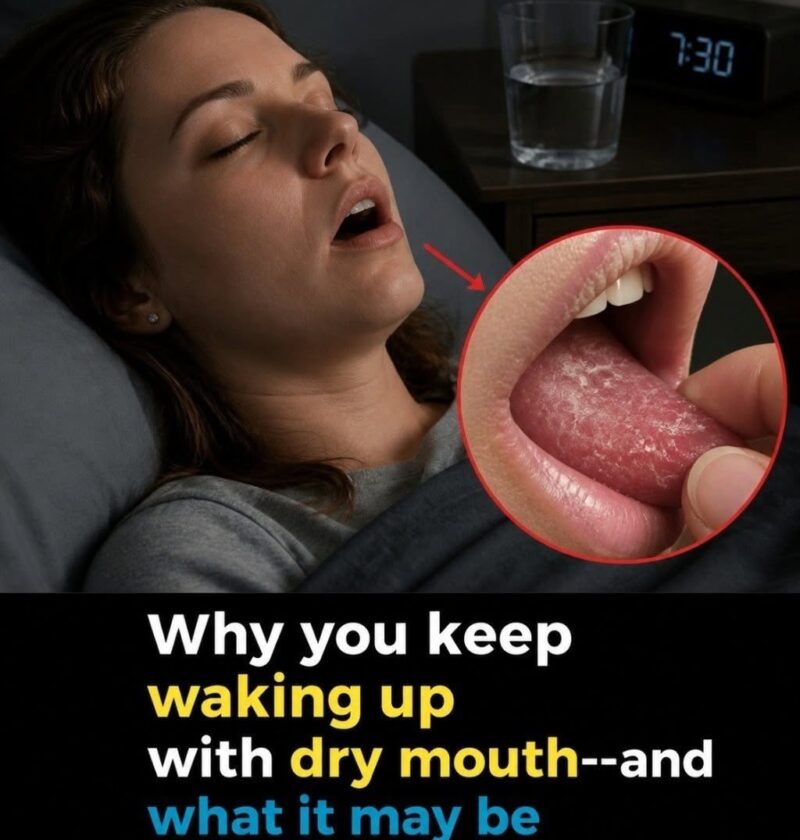
Waking up with a dry mouth is common, but it can be a sign that something is affecting your saliva production, breathing, or hydration. Possible causes include:
- Sleeping with your mouth open — Often caused by nasal congestion, allergies, a stuffy nose, or simply sleeping position.
- Snoring or sleep apnea — Mouth breathing during sleep can dry out your mouth; loud snoring, gasping, morning headaches, or daytime sleepiness may be clues to discuss with a healthcare professional.
- Dehydration — Not drinking enough fluids, heavy sweating, alcohol intake, or salty foods can contribute.
- Medications — Many medicines can cause dry mouth, including some allergy medicines, antidepressants, blood pressure medications, and others.
- Dry air — Heating, air conditioning, or low humidity can reduce moisture overnight.
- Dental or oral issues — Reduced saliva can increase the risk of cavities, bad breath, and gum problems.
What you can try
- Drink enough water throughout the day.
- Use a humidifier if your room air is dry.
- Address nasal congestion if you have it.
- Avoid alcohol close to bedtime.
- Practice good oral hygiene and consider saliva substitutes or sugar-free gum/lozenges if needed.
When to get advice
Consider talking with a healthcare professional or dentist if dry mouth is persistent, severe, or comes with symptoms such as difficulty swallowing, frequent cavities, mouth sores, unexplained weight changes, or signs of sleep apnea.
A dry mouth occasionally is usually harmless, but a recurring morning dry mouth can be your body’s way of signaling that your sleep, breathing, hydration, or medications may need attention.