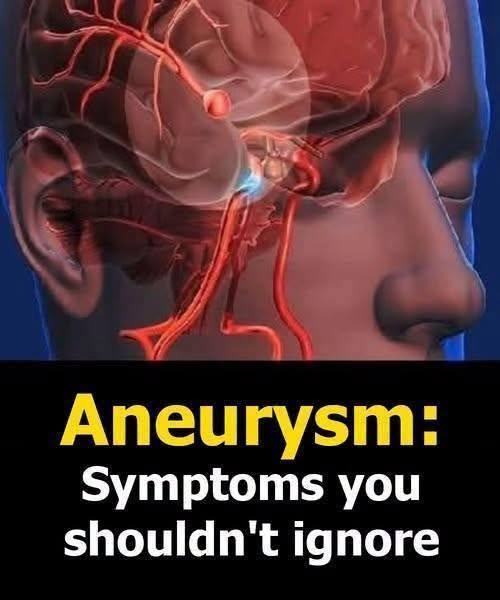
That headline is trying to grab attention, but it’s referring to a serious (and sometimes silent) condition called an Aneurysm. The key issue is that many aneurysms cause no symptoms until they become large or rupture, so warning signs—when they appear—should be taken seriously.
Signs you should not ignore
Brain aneurysm warning signs
If an aneurysm affects the brain or is leaking, symptoms may include:
- Sudden, severe headache (“worst headache of your life”)
- Blurred or double vision
- Drooping eyelid or uneven pupils
- Nausea or vomiting with headache
- Confusion or fainting
A rupture can lead to a life-threatening Subarachnoid hemorrhage.
Aortic aneurysm warning signs (chest or abdomen)
- Sudden, intense chest, back, or abdominal pain
- A deep “tearing” or ripping sensation
- Shortness of breath
- Pulsating feeling in the abdomen
- Dizziness or fainting (possible rupture)
General emergency signs (any aneurysm type)
- Sudden severe pain that doesn’t go away
- Low blood pressure, weakness, or collapse
- Signs of shock (pale, sweaty, fast heartbeat)
Important reality
- Most aneurysms are silent for years
- Many are found accidentally on scans
- Not every headache or pain is an aneurysm
When to act immediately
Seek emergency care if there is:
- Sudden “worst headache”
- Sudden severe chest/back/abdominal pain
- Fainting or confusion
- Sudden neurological changes (speech, vision, weakness)
Bottom line
Aneurysms are rare but serious when they rupture. The real warning is sudden, severe, unusual symptoms—not mild or ongoing discomfort.
If you want, I can explain risk factors (high blood pressure, smoking, family history) or how aneurysms are detected before they become dangerous.