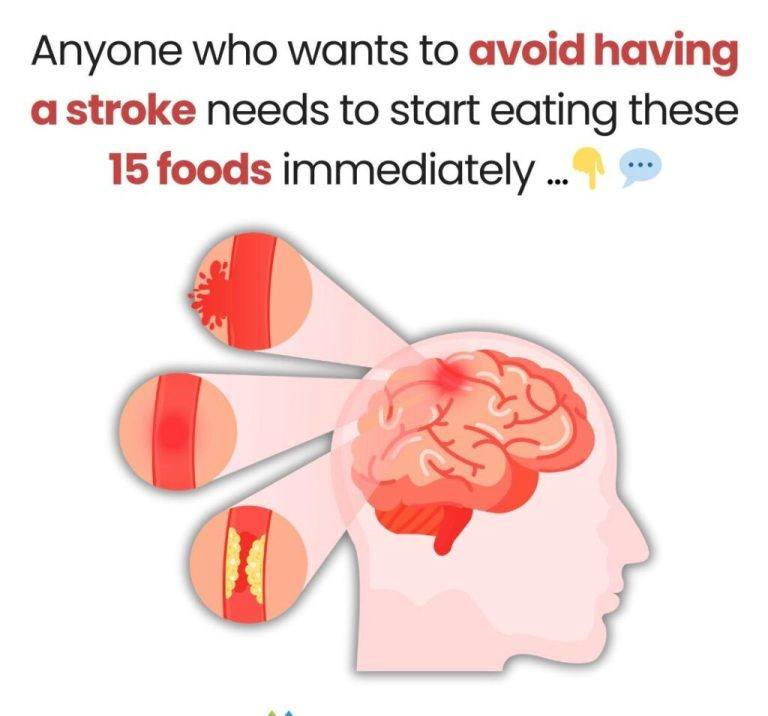
That headline is a bit clickbait-y. No single set of “15 magic foods” can guarantee you won’t have a stroke. What does matter is a long-term pattern of eating that supports blood pressure, cholesterol, blood sugar, and blood vessel health—those are the real drivers of stroke risk. Stroke
That said, research-backed “brain- and heart-friendly” foods consistently show up in stroke-prevention diets (like DASH and Mediterranean-style eating). Here are 15 solid choices you can realistically build into your routine:
1. Leafy greens (spinach, kale, mustard greens) – high in vitamin K, nitrates, and antioxidants that support blood vessels.
2. Berries (blueberries, strawberries) – help reduce oxidative stress and inflammation.
3. Oats – rich in soluble fiber that helps lower LDL cholesterol.
4. Fatty fish (salmon, sardines, mackerel) – omega-3s support heart rhythm and reduce inflammation.
5. Nuts (especially walnuts and almonds) – improve lipid profiles and vascular health.
6. Olive oil – a key Mediterranean fat linked with lower cardiovascular risk.
7. Legumes (lentils, chickpeas, beans) – fiber + plant protein help control blood sugar and cholesterol.
8. Garlic – may help modestly reduce blood pressure.
9. Tomatoes – contain lycopene, linked with reduced stroke risk in some studies.
10. Citrus fruits (oranges, lemons, grapefruit) – vitamin C and flavonoids support vessel health.
11. Whole grains (brown rice, whole wheat, barley) – better for blood sugar and cholesterol than refined grains.
12. Yogurt (low-fat/unsweetened) – supports gut health and may help blood pressure regulation.
13. Avocados – potassium-rich, helpful for blood pressure control.
14. Beets – high in nitrates that can improve blood flow.
15. Green tea – associated with modest cardiovascular protection in population studies.
What actually matters more than any “superfood”
If stroke prevention is the goal, these matter even more than individual foods:
- Keeping blood pressure in a healthy range
- Staying physically active
- Not smoking
- Limiting salt, sugar, and ultra-processed foods
- Managing diabetes and cholesterol if present
If you want, I can turn this into a simple daily meal plan using foods available in Pakistan so it’s practical instead of just theoretical.