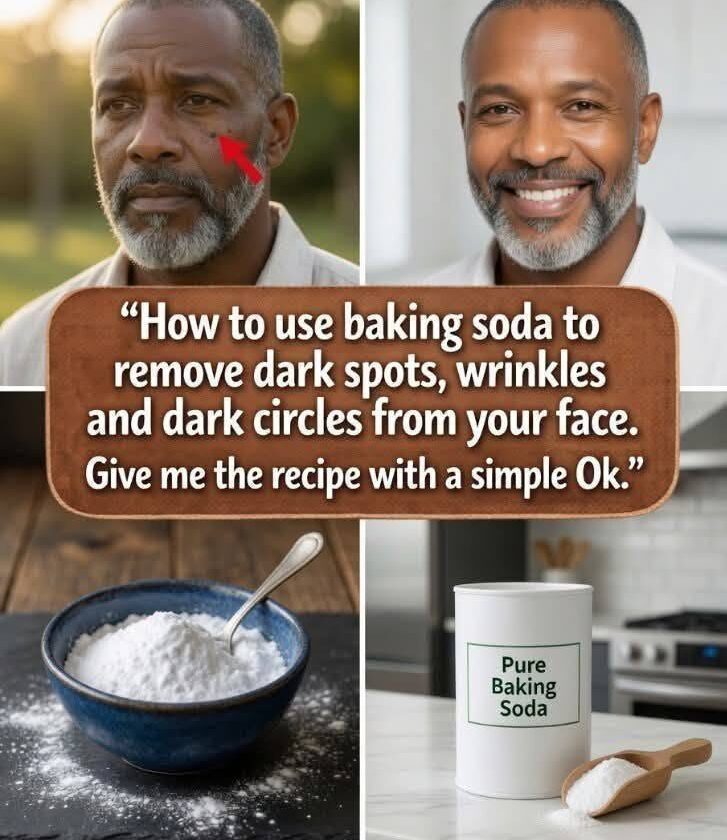
Baking soda (sodium bicarbonate) gets a lot of attention in skincare hacks, but for the face it’s one of those “works in theory, risky in practice” ingredients.
Possible (limited) benefits
People sometimes use baking soda because it is:
- Mildly abrasive (can act as a physical exfoliant)
- Alkaline, which can temporarily reduce oiliness
- Slightly antibacterial in lab settings
That’s why it shows up in DIY scrubs for acne or “brightening.”
The big problem: it disrupts your skin barrier
Healthy skin is naturally slightly acidic (pH ~4.5–5.5). Baking soda is strongly alkaline (pH ~9).
This can:
- Damage the skin barrier
- Strip natural oils too aggressively
- Increase dryness and sensitivity
- Trigger redness or irritation
Over time, this can actually make acne, pigmentation, or oiliness worse—not better.
Risks of using baking soda on the face
- Burning or stinging sensation
- Dry patches and peeling
- Breakouts from barrier damage
- Worsening of eczema or sensitive skin
- Increased sun sensitivity after irritation
Dermatology guidance generally discourages its use as a regular skincare product.
If someone still wants to use it (safer approach)
Not recommended routinely, but if used at all:
- Never use daily
- Avoid undiluted use (no “paste scrubs” directly on skin)
- Do a patch test first
- Avoid around eyes and broken skin
- Rinse quickly, don’t leave it on
Even then, safer alternatives are better.
Better alternatives for similar goals
- For exfoliation: lactic acid, glycolic acid, or salicylic acid (gentler and controlled)
- For acne: benzoyl peroxide or salicylic acid cleansers
- For oil control: niacinamide-based products
- For gentle physical exfoliation: soft microfiber or enzyme exfoliants
Bottom line
Baking soda is more likely to irritate your skin than improve it, especially on the face. It’s not a dermatology-recommended skincare ingredient.
If you want, tell me your skin type (oily, dry, acne-prone, sensitive), and I can suggest a simple, safe routine instead.
c