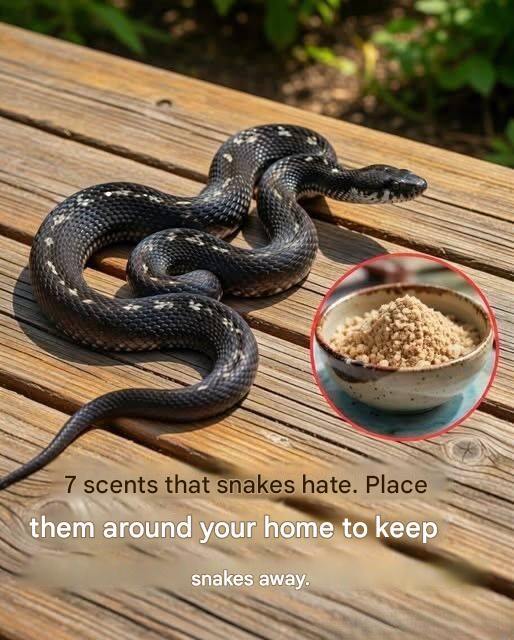
Snakes do have a strong sense of smell, but the idea that certain “strong scents instantly repel them” is mostly exaggerated. What’s true is that snakes mainly detect chemicals through their tongue and Jacobson’s organ, and they tend to avoid areas that feel unsafe or unsuitable—not specific “magic smells.”
There is no scientifically proven scent that reliably repels all snakes, but a few odors are commonly reported as deterrents in anecdotal or limited studies. Here are 7 often mentioned ones, along with how they’re actually (and safely) used:
1. Ammonia
Strong ammonia smells may irritate snakes, but it’s not a true repellent. People sometimes place rags soaked in diluted ammonia in containers near entry points. This is risky and not recommended around children or pets due to toxicity.
2. Vinegar
Some claim vinegar discourages snakes, especially near water edges. It may briefly irritate them, but it evaporates quickly and has no lasting effect.
3. Clove oil & cinnamon oil
These essential oils are frequently marketed as snake repellents. They may irritate sensitive receptors, but evidence is weak. They are sometimes sprayed in diluted form around perimeters.
4. Peppermint oil
Often promoted online, peppermint oil has no strong scientific backing for repelling snakes. It may mask odors slightly but won’t stop a snake from entering if conditions are right.
5. Sulfur
Sulfur powder is sometimes used in snake repellent products. It has a strong smell, but results are inconsistent and can be unpleasant or hazardous to handle.
6. Garlic & onions
The strong sulfur compounds are believed to be irritating, but again, snakes are not reliably deterred by them. At best, this is folklore-level advice.
7. Mothballs (naphthalene)
Commonly misused as snake repellents, but they are dangerous and illegal for outdoor use in many places. They can harm pets, wildlife, and humans without effectively controlling snakes.
The important reality
Instead of relying on smells, the most effective way to keep snakes away is habitat control:
- Remove piles of wood, trash, and dense vegetation
- Seal gaps under doors and walls
- Control rodents (snakes follow food)
- Keep grass trimmed and surroundings clean
snake are not driven away by scents alone—they respond mainly to food, shelter, and temperature conditions.
If you want, I can give you safe, proven snake-proofing methods specifically for homes in hot climates like Multan, where snakes are more likely to appear seasonally.