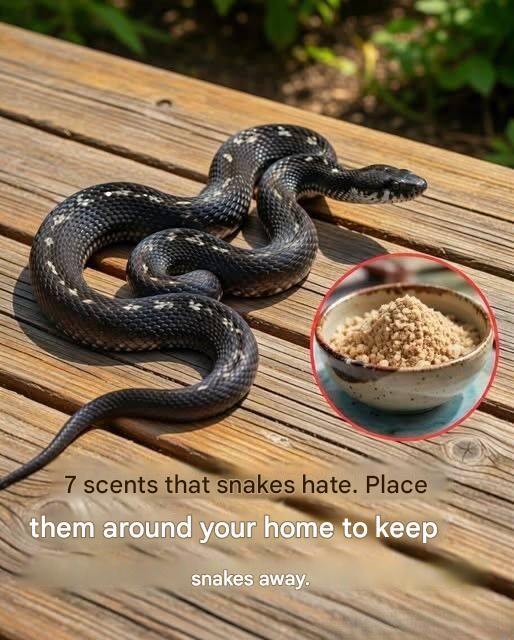
Yes — snakes rely heavily on smell and chemical sensing through their tongues and a special organ called the Jacobson’s organ, so strong odors can bother or disorient them. (The Environmental Literacy Council)
Commonly mentioned smells that snakes tend to avoid include:
- Clove oil
- Cinnamon oil
- Peppermint oil
- Garlic and onions
- Ammonia
- White vinegar
- Sulfur / cedarwood scents (The Environmental Literacy Council)
Here’s how people usually use them:
- Mix essential oils (like clove + cinnamon) with water and spray around doors, walls, sheds, and garden edges.
- Place crushed garlic/onion near possible entry points.
- Use vinegar around pools or damp areas.
- Put cedar chips around yards or flowerbeds.
- Reapply after rain because scents fade quickly. (Aquamarine Power)
That said, there’s an important caveat: many “snake repellent” claims are exaggerated. Experts and field observations often find that smells alone are unreliable for long-term snake control. (bestsnakerepellent.com)
The most effective prevention methods are usually:
- keeping grass short,
- removing wood piles and clutter,
- controlling rats/mice,
- sealing gaps around the house,
- reducing hiding spots. (Reddit)
Also avoid using mothballs or harsh chemicals indoors — they can be toxic to people and pets and are not proven snake solutions. (The Environmental Literacy Council)