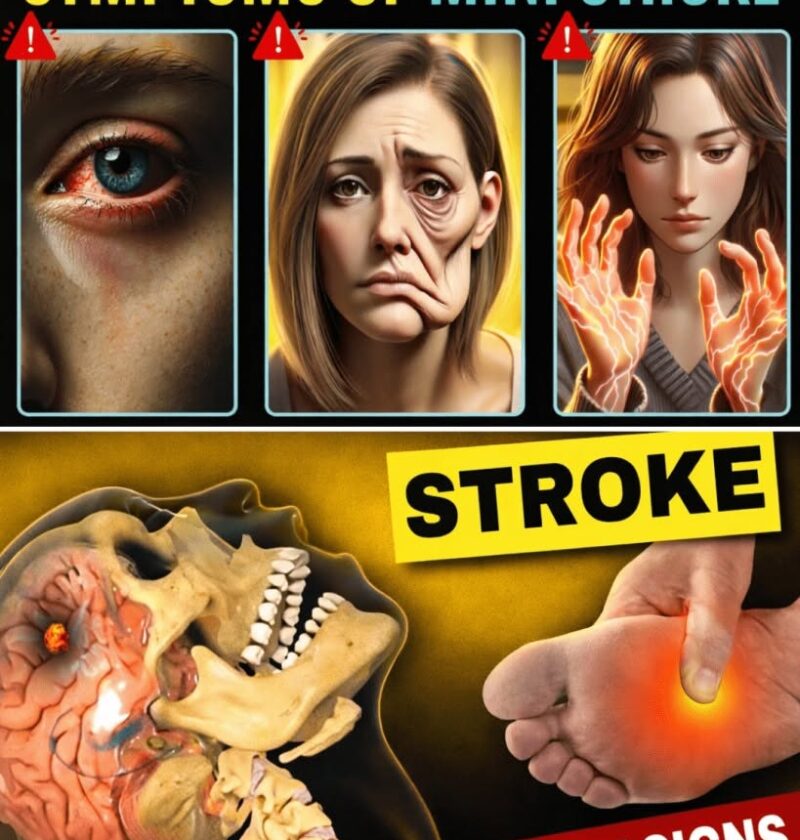
A more accurate framing is: “Possible warning signs of a TIA you should never ignore.”
🧠 What a TIA is
A Transient Ischemic Attack happens when blood flow to part of the brain is temporarily blocked. Symptoms usually last minutes to hours and fully resolve—but it can be a strong warning of a future stroke.
🚨 Key warning signs (not 15 separate conditions—just variations of the same core symptoms)
🧍♂️ Sudden weakness or numbness
- Face, arm, or leg (especially one side of the body)
🗣️ Speech problems
- Slurred speech
- Trouble finding words
- Confusion in speaking or understanding
👁️ Vision changes
- Sudden loss of vision in one eye
- Blurred or double vision
⚖️ Balance or coordination issues
- Dizziness
- Loss of balance
- Trouble walking
😵 Sudden confusion
- Difficulty understanding surroundings or conversations
😖 Severe sudden headache (less common in TIA than stroke)
- Especially if unusual or intense
⏱️ The most important fact
Even if symptoms disappear in 5–30 minutes:
A TIA is a medical emergency warning, not a “false alarm.”
Up to 1 in 5 people who have a TIA may have a full stroke within a short period if not evaluated.
🚑 What to do immediately
Use the FAST rule:
- Face drooping
- Arm weakness
- Speech difficulty
- Time to call emergency services
Do not wait for symptoms to go away.
⚠️ Common misconception
- “It went away, so I’m fine” → dangerous assumption
- TIAs often signal underlying artery disease or heart-related clot risk
🧠 Bottom line
A TIA is not about “15 hidden signs”—it’s about a sudden neurological change that resolves quickly but signals high stroke risk.
If you want, I can also explain how to tell the difference between TIA, migraine, and low blood sugar, since they’re commonly confused but very different in risk.