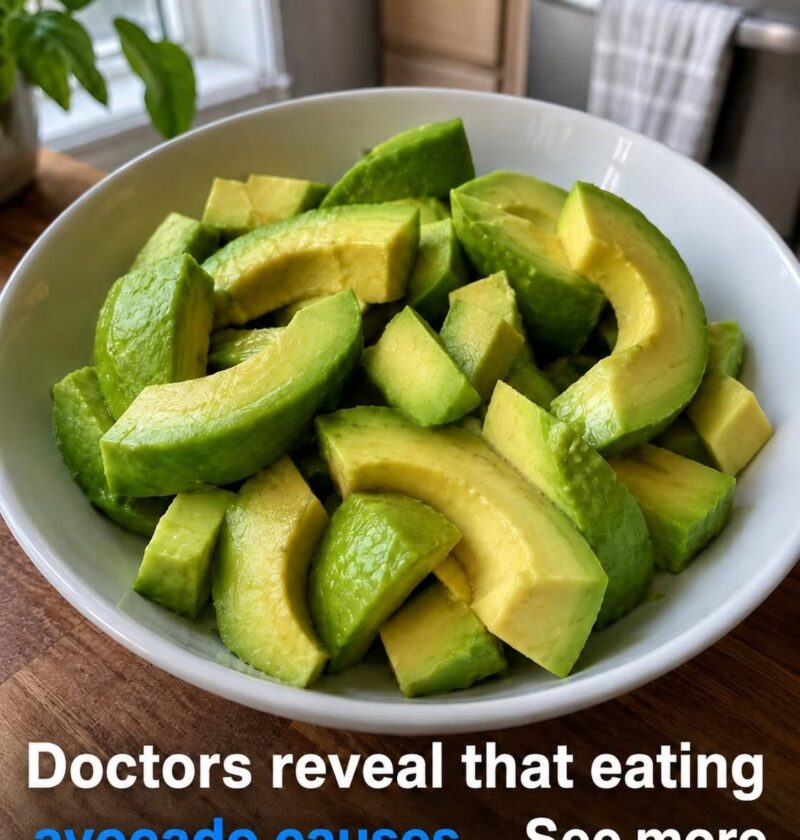
That phrase—“Doctors reveal that eating avocado causes… see more”—is classic clickbait. It’s designed to make you curious, but it usually hides a positive or exaggerated claim about health benefits.
Here’s what real medical evidence actually shows about avocados:
What eating avocado really does
1. Supports heart health
Avocado is rich in:
- Monounsaturated fats (heart-healthy fats)
- Potassium (helps blood pressure)
- Fiber (supports cholesterol control)
Studies suggest it may help:
- Lower LDL (“bad”) cholesterol
- Support healthier blood vessels
- Improve overall heart risk profile
2. May help lower “bad” cholesterol
Replacing saturated fats (like butter or processed meats) with avocado fat can:
- Reduce LDL cholesterol
- Maintain or slightly increase HDL (“good”) cholesterol
3. Supports weight control (in moderation)
Despite being calorie-dense, avocado:
- Increases fullness due to fiber and fat
- May reduce snacking in some people
But portion size still matters.
4. Helps nutrient absorption
Avocados help your body absorb fat-soluble nutrients from other foods, such as:
- Vitamin A
- Vitamin D
- Vitamin E
- Vitamin K
5. Good for digestion
Thanks to fiber content, avocado may:
- Support healthy bowel movements
- Improve gut microbiome diversity
What avocado does NOT do (despite viral claims)
❌ It does not “burn belly fat”
❌ It does not “detox the liver”
❌ It does not cure heart disease
❌ It is not a miracle weight-loss food
Who should be careful?
Avocado is healthy for most people, but:
- It is calorie-dense (too much can lead to weight gain)
- People with kidney disease may need to monitor potassium intake
- Portion control matters if you are on a strict calorie plan
Bottom line
Eating avocado does not cause anything dangerous—in fact, it is generally linked with better heart and metabolic health when used