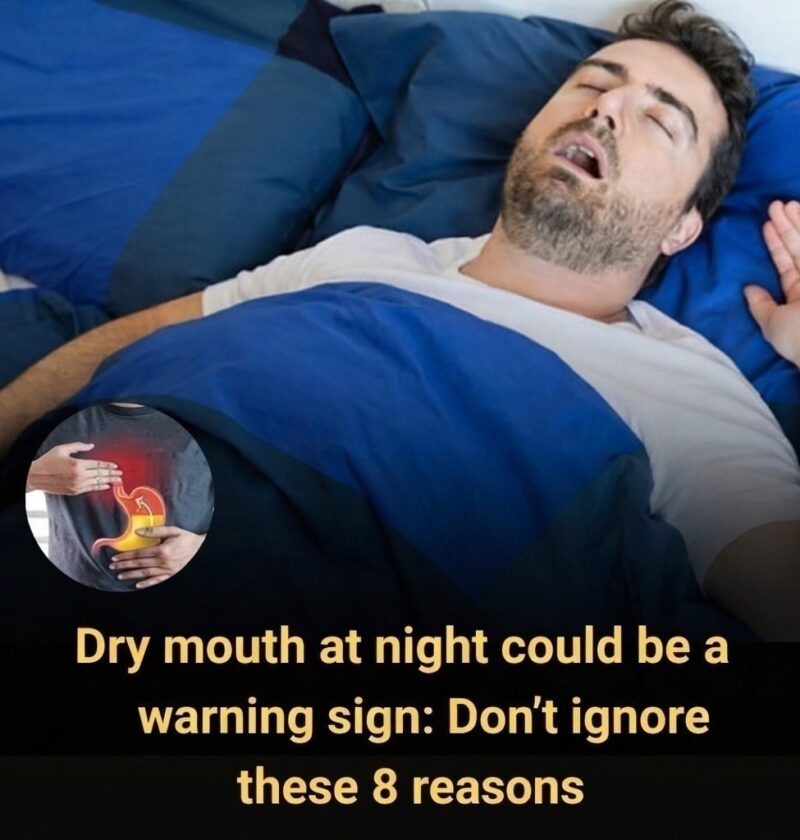
Dry mouth at night is common, but it can sometimes signal an underlying issue rather than just “normal dehydration.”
Xerostomia is the medical term for dry mouth, and it can happen due to sleep habits, medications, or health conditions.
🌙 8 warning signs that shouldn’t be ignored
1) Persistent dry mouth every night
If it happens regularly (not just occasionally), it may point to:
- dehydration habits
- medication side effects
- mouth breathing or sleep issues
2) Thick or sticky saliva in the morning
This can indicate reduced saliva production overnight, often linked with:
- dehydration
- salivary gland issues
- certain medications
3) Bad breath that doesn’t improve with brushing
Saliva normally cleans the mouth. Low saliva allows bacteria to grow more easily.
4) Difficulty swallowing dry foods
Saliva helps lubricate food. Reduced saliva can make swallowing uncomfortable.
5) Cracked lips or mouth sores
Chronic dryness can lead to:
- lip cracking
- irritation
- small ulcers
6) Burning or dry tongue sensation
Some people feel:
- burning mouth feeling
- rough or sore tongue
7) Frequent thirst at night
This can be simple dehydration—but if persistent, it may also be linked with:
- blood sugar issues
- medication effects
8) Tooth decay or sensitive teeth increasing
Saliva protects teeth. Low saliva can increase:
- cavities
- enamel erosion
- gum problems
🧠 Common causes of night dry mouth
- Mouth breathing during sleep
- Dehydration
- Antihistamines or antidepressants
- Snoring or sleep apnea
- Smoking or caffeine intake
⚠️ When to seek medical advice
See a doctor or dentist if dry mouth:
- lasts for weeks
- affects sleep regularly
- is combined with excessive thirst or fatigue
- causes dental problems
👍 Simple ways to reduce it
- Drink enough water during the day
- Avoid caffeine late evening
- Treat nasal congestion (to reduce mouth breathing)
- Use a humidifier if air is dry
- Maintain oral hygiene
🧠 Bottom line
Xerostomia is often harmless but persistent night-time dry mouth can be a sign of lifestyle factors or underlying conditions. The key is identifying the cause rather than fearing a single symptom list.
If you want, I can also explain how to tell if dry mouth is from diabetes, sleep apnea, or medications in a simple comparison chart.