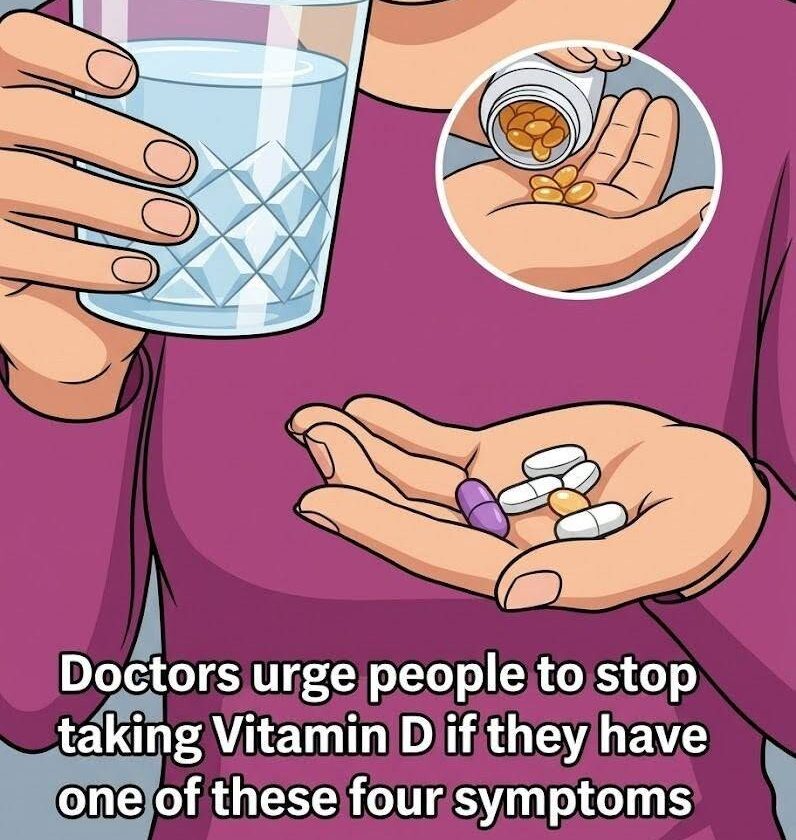
That headline is another clickbait-style warning. It’s written to sound urgent, but in real medicine there is no rule that says everyone should “stop vitamin D immediately” based on a generic list of symptoms.
The supplement being discussed is Vitamin D, which is widely used and generally safe at proper doses.
🧠 What doctors are actually warning about
Excess vitamin D is only a concern in cases of over-supplementation, usually for weeks or months at high doses. This can lead to high calcium levels in the blood (hypercalcemia).
⚠️ Symptoms sometimes linked to too much vitamin D
If vitamin D is excessively high, possible symptoms can include:
- Nausea or vomiting
- Loss of appetite
- Excessive thirst and frequent urination
- Weakness, fatigue, or confusion
👉 But these symptoms are non-specific and can be caused by many other conditions too.
🚫 Important reality check
- You should not stop vitamin D just because of symptoms found online
- Stopping suddenly without testing may be unnecessary
- Doctors rely on blood tests, especially:
- 25-hydroxy vitamin D level
- Blood calcium levels
🧪 When real concern exists
Risk is higher if someone:
- Takes very high doses (e.g., long-term megadoses)
- Combines multiple supplements unknowingly
- Has kidney or calcium metabolism problems
👍 Safe approach
- Use recommended doses unless prescribed otherwise
- Avoid stacking multiple vitamin D products
- Get a blood test if using long-term supplements
- Follow medical advice, not symptom lists from articles
🧠 Bottom line
This headline exaggerates risk. Vitamin D is not dangerous for most people—it only becomes a problem with excessive, unmonitored use over time.
If you want, I can explain how to know if you actually need vitamin D or not without guessing, or what symptoms truly matter vs internet myths.