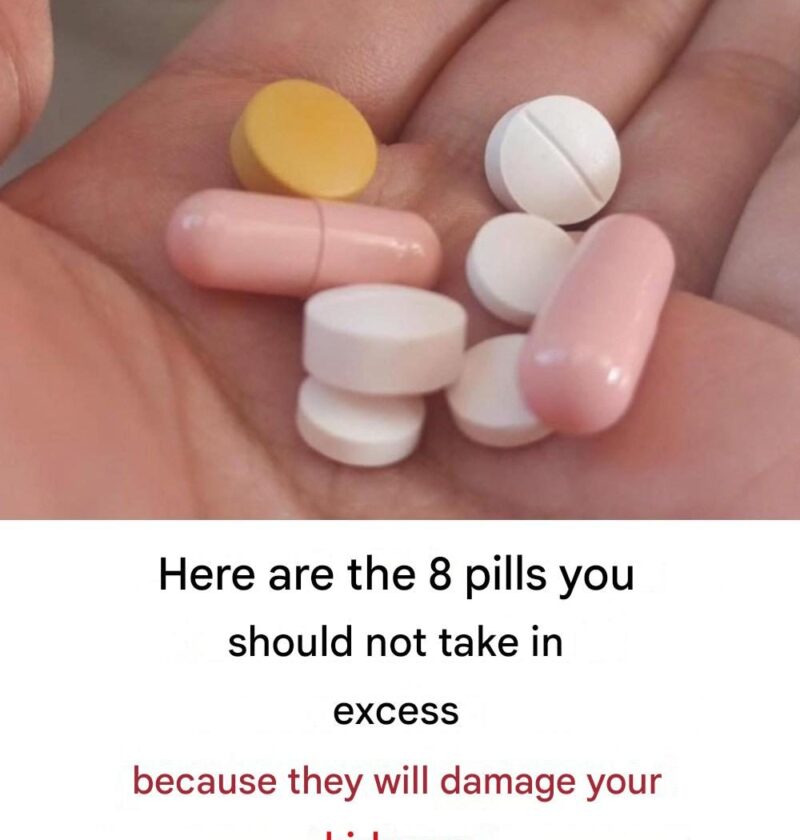
There isn’t a universally safe list of “pills you should never take,” because many medicines that can affect the kidneys are still useful when prescribed correctly. The real issue is dose, duration, dehydration, existing kidney disease, and drug combinations.
That said, here are 8 common types of pills that can damage the kidneys if misused or used in high-risk people:
1) NSAID painkillers
Examples: Ibuprofen, Naproxen, Diclofenac
These are one of the most common causes of drug-related kidney injury, especially with long-term use, high doses, or dehydration.
2) Certain antibiotics (aminoglycosides)
Examples: gentamicin, amikacin
These can directly damage kidney tubules, especially in hospitals when given in high doses.
3) Proton pump inhibitors (acid reducers)
Example: Omeprazole
Long-term use has been linked to chronic kidney inflammation in some people.
4) Lithium (for mood disorders)
Example: Lithium
Can slowly damage kidney function over time if blood levels are not carefully monitored.
5) Certain blood pressure medicines (ACE inhibitors/ARBs)
Examples: enalapril, lisinopril, losartan
Usually kidney-protective in the long run, but can cause kidney function to drop in dehydration or kidney artery narrowing.
6) Diuretics (“water pills”)
Examples: furosemide, hydrochlorothiazide
They don’t usually “damage” kidneys directly but can cause dehydration and electrolyte imbalance that stresses kidneys.
7) Antiviral drugs (some older or high-dose types)
Examples: acyclovir (high doses or IV form)
Can crystallize in kidneys if hydration is poor.
8) Herbal and “natural” supplements
Examples: aristolochia-containing herbs, unregulated slimming or bodybuilding supplements
These are a major hidden cause of kidney injury because composition is often unknown or contaminated.
Important reality check
Most kidney damage from these drugs happens when:
- They are taken without medical supervision
- Taken for too long
- Used during dehydration (fever, diarrhea, heat)
- Combined with other kidney-stressing medicines
If you want, I can also tell you:
- early warning signs of kidney damage
- which painkillers are safest for kidneys
- or how to protect your kidneys while using medicines safely