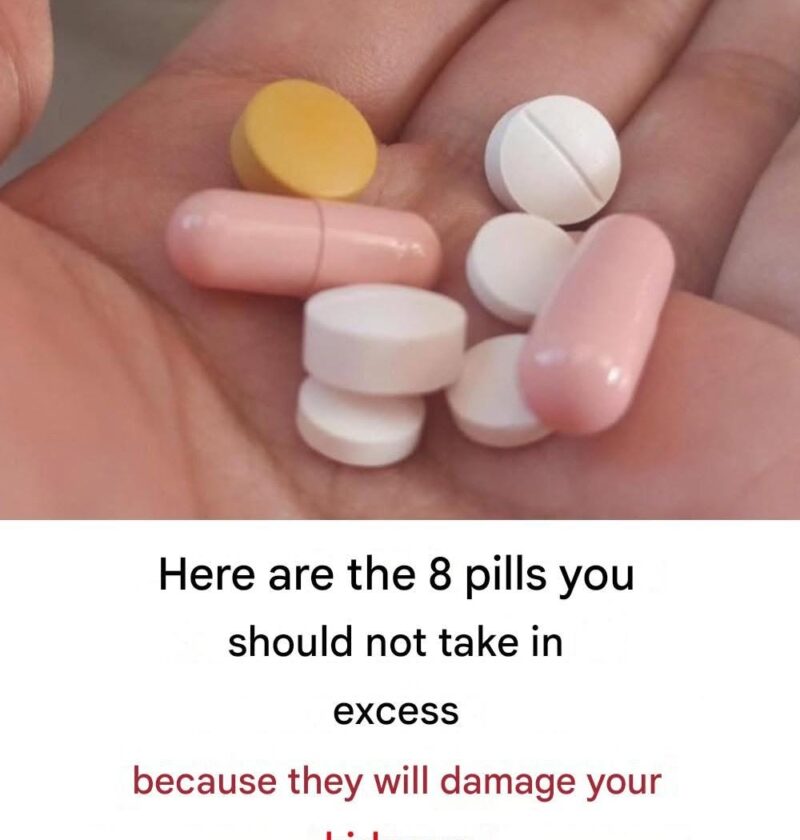
That headline is another clickbait-style exaggeration. There is no universally accepted list of “eight pills you should never take,” because whether a medication affects the kidneys depends on dose, duration, hydration, and your existing health (especially kidney function).
That said, some medications are known to potentially harm the kidneys in certain situations:
Common medicines that can affect the kidneys
1. Painkillers (NSAIDs)
Examples:
- Ibuprofen
- Diclofenac
- Naproxen
Why risk exists:
- Can reduce blood flow to the kidneys, especially with long-term use, dehydration, or high doses.
2. Certain antibiotics
Examples:
- Gentamicin
- Vancomycin
Why risk exists:
- Can be toxic to kidney cells at high levels or prolonged use (usually monitored in hospitals).
3. Contrast dyes (for CT scans)
- Used in imaging procedures (not a “pill,” but often included in such lists)
- Can temporarily stress kidneys, especially in people with pre-existing kidney disease
4. Certain blood pressure or heart medications (in specific cases)
- Some drugs affecting kidney blood flow may need monitoring, especially:
- Diuretics (“water pills”)
- ACE inhibitors / ARBs in certain conditions (usually safe but monitored)
5. Lithium
- Lithium
- Long-term use can affect kidney function in some patients and requires regular monitoring
Important context
These medicines are not automatically dangerous. In fact:
- NSAIDs are widely used safely for short-term pain relief
- Antibiotics like vancomycin or gentamicin are lifesaving when needed
- Kidney risk is usually related to overuse, high doses, dehydration, or existing kidney disease
Higher-risk situations
Kidney risk is more likely if you:
- Already have Chronic kidney disease
- Are dehydrated
- Are elderly
- Take multiple medications together
- Use painkillers frequently for long periods
When to be careful
- Don’t use painkillers daily without medical advice
- Avoid mixing multiple NSAIDs
- Stay hydrated when ill or on medication
- Get kidney function checked if on long-term treatment
Bottom line
There is no “forbidden eight pills” list. Instead, a small group of commonly used medications can stress the kidneys in certain conditions, especially NSAIDs and some antibiotics—but they are safe when used correctly.
If you want, tell me what medicines you take, and I can check whether any of them are kidney-sensitive for your situation.