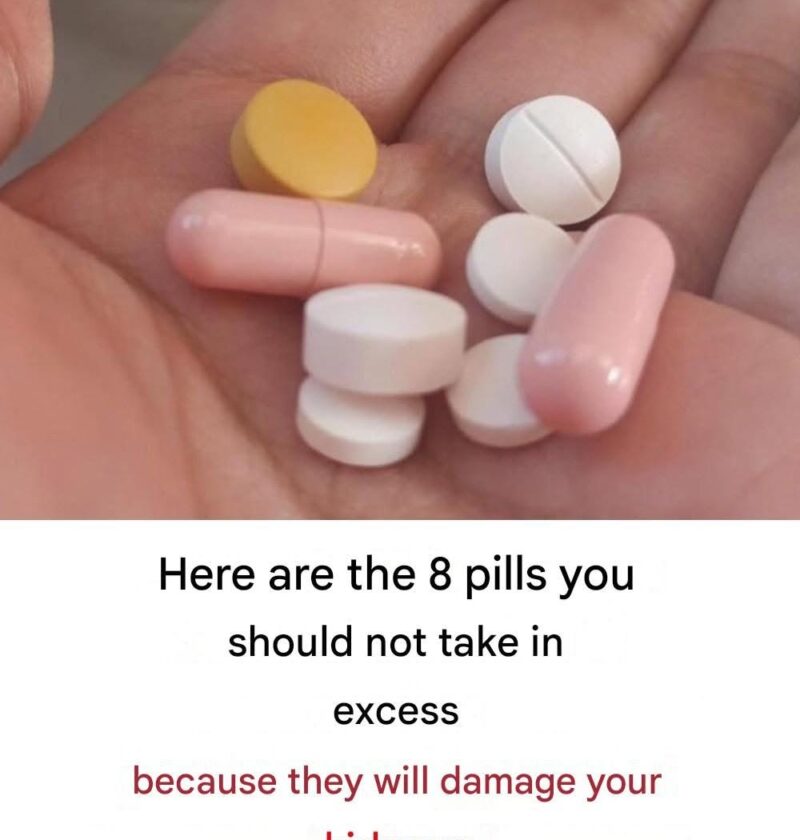
Many medicines can affect the kidneys, especially when taken in high doses, for a long time, or in people who already have kidney disease. It’s not that these medicines are always unsafe—many are important and appropriate when used correctly—but some deserve caution.
Eight common types of pills that can potentially harm the kidneys include:
- NSAID painkillers (non-steroidal anti-inflammatory drugs)
Examples: ibuprofen, naproxen, diclofenac- Can reduce blood flow to the kidneys and may trigger kidney injury, especially with dehydration, older age, or existing kidney problems.
- Certain antibiotics
Examples: aminoglycosides (such as gentamicin) and some others- Some antibiotics can be toxic to the kidneys, particularly at high doses or in vulnerable patients.
- Proton pump inhibitors (PPIs) for acid reflux
Examples: omeprazole, pantoprazole- Long-term use has been associated in studies with kidney problems in some people, though the absolute risk is generally low.
- Diuretics (“water pills”)
Examples: furosemide, hydrochlorothiazide- Can contribute to kidney stress if they cause dehydration or electrolyte problems.
- ACE inhibitors and ARBs (blood pressure medicines)
Examples: lisinopril, enalapril, losartan- These are often kidney-protective in conditions like diabetes, but they can affect kidney function or potassium levels in certain situations and require monitoring.
- Certain antiviral medications
Examples: some drugs used for HIV or viral infections- Some can affect kidney function and need dose adjustments.
- Lithium (a mood-stabilizing medication)
- Long-term use can affect kidney function and requires regular monitoring.
- High-dose supplements or “natural” pills
Examples: excessive vitamin D, some herbal products, and bodybuilding supplements- Some can cause kidney injury or kidney stones, depending on ingredients and doses.
Seek medical advice promptly if you notice symptoms such as:
- Much less urine than usual
- Swelling in the legs or face
- Blood in urine
- Severe fatigue, confusion, or persistent nausea
Do not stop prescription medicines suddenly without talking to your healthcare provider—some of these drugs protect the kidneys when used correctly. If you tell me your age, medicines/supplements you take, and any kidney concerns, I can help identify which ones may need review.