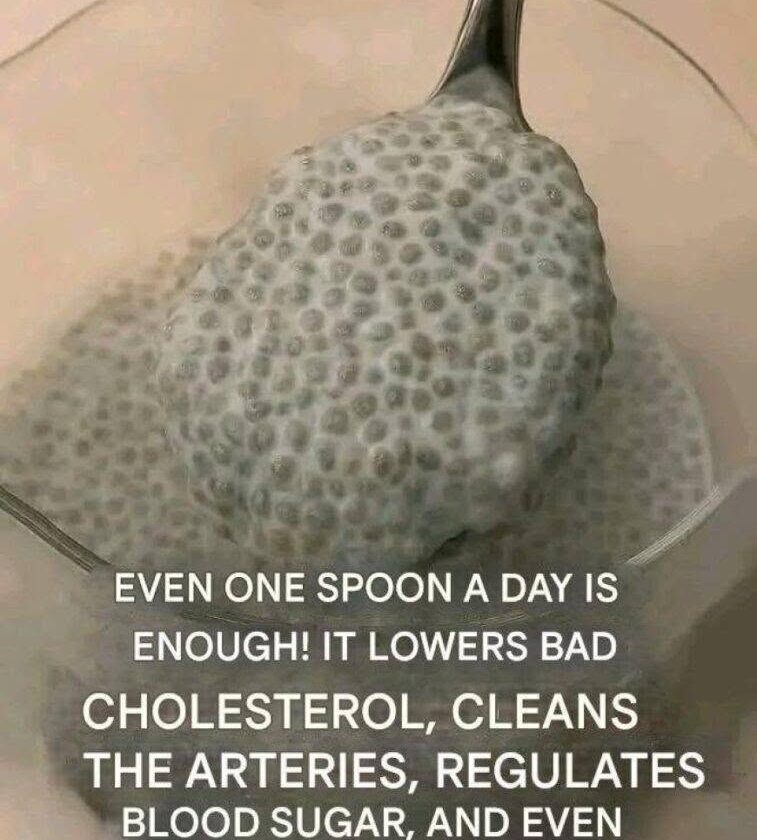
“Even just one spoonful a day is enough! It lowers bad cholesterol, cleans arteries, regulates blood sugar, and even suppresses hunger.”
What it really means
It’s usually trying to promote a specific food (often things like olive oil, apple cider vinegar, honey mixtures, chia seeds, or herbal blends) and is saying:
“This small daily amount may have some health benefits, but we’re overstating them into a ‘cure-all’ claim.”
Why the claims are misleading
- “Lowers bad cholesterol”
Some foods (like olive oil, nuts, fiber-rich seeds) can modestly improve cholesterol, but not in a dramatic “fix everything” way. - “Cleans arteries”
This is not medically accurate wording. Arteries don’t get “cleaned” by food. Plaque buildup is a complex long-term process. - “Regulates blood sugar”
Diet can help stabilize blood sugar, especially fiber-rich foods, but it depends on the whole diet and medical condition (like diabetes). - “Suppresses hunger”
Some foods increase satiety (fiber, protein, healthy fats), but this varies widely and is not a guaranteed effect from “one spoonful.”
The key problem
The phrase “even just one spoonful is enough” is the giveaway. Real nutrition science does not work like:
one ingredient = multiple disease cures
A more accurate version would be:
“Some nutrient-rich foods, in appropriate amounts as part of a balanced diet, may support heart health, blood sugar control, and appetite regulation.”
Bottom line
It’s not necessarily describing a harmful food—but it is overselling normal dietary effects into a miracle cure narrative.
If you tell me what the “spoonful” actually is, I can break down what it really does (and what it doesn’t).